
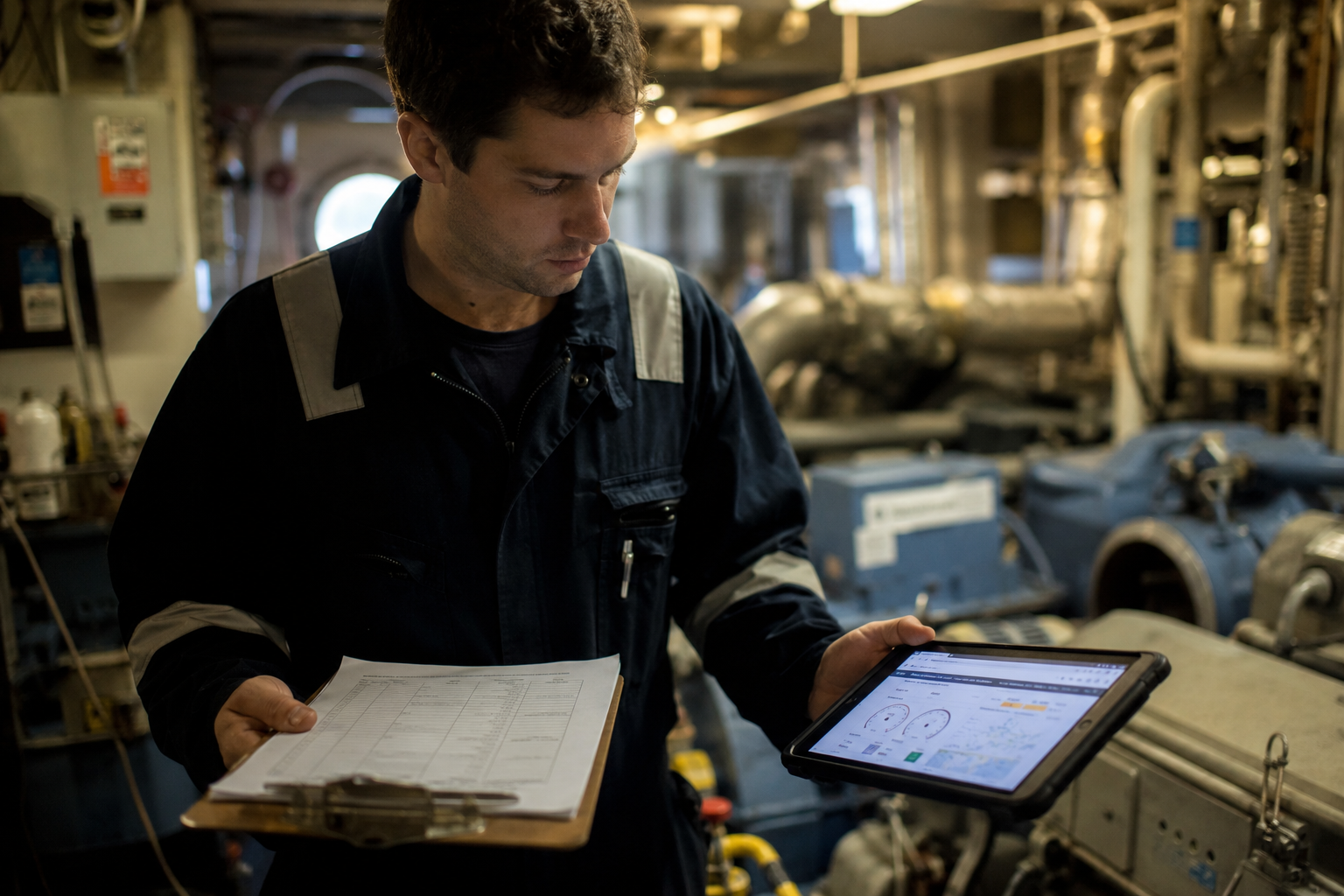
Why Marine Fleets Struggle with Manual Vessel Maintenance - and What the Data Shows
Marine fleet managers responsible for maintenance and safety compliance face a common operational reality: a stack of paper logs, a shared spreadsheet, and a mental list of what's due. It works - until it doesn't.
The shift to cloud-based vessel management software isn't a technology trend. It's a response to a specific set of operational failures that paper and spreadsheets were never designed to handle. Here's what those failures look like, what they cost, and what a modern maintenance platform actually changes.
The Core Problem: Paper Logs Were Built for Documentation, Not Operations
Paper logbooks fulfill a legal record-keeping function. They were never designed to schedule maintenance across a multi-vessel fleet, flag overdue tasks in real time, or give a fleet manager visibility into which vessels are at risk of failure this week.
That distinction matters. When fleet operations rely on tools built only for documentation, the result is a persistent gap between what's on paper and what's actually happening on the water.
According to research by maritime intelligence firm Thetius, manual data entry can account for up to 40% of an operator's time. As one former vessel operator and current BI & Data Governance lead noted: "If the data isn't accurate when it reaches the operator, there's a real risk that the person making the decision can't use it - which delays everything."
For a marine fleet manager, that delay isn't abstract. It shows up as a missed maintenance interval, a crew change where critical information doesn't transfer, or a USCG inspection where a required record can't be produced.
Three Structural Breakdowns That Define Manual Maintenance
Understanding why marine fleets struggle with manual vessel maintenance comes down to three specific failures - each of which paper-based systems make worse.
1. The Visibility Gap
Paper maintenance logs are a historical record. They tell you what was done - not what's overdue, not what's approaching a critical threshold, and not which vessel in your fleet is most at risk today.
A fleet manager running five, ten, or twenty vessels on paper has no real fleet-wide view. Checking maintenance status requires physically reviewing logs vessel by vessel, or maintaining a separate spreadsheet that someone has to keep current. In practice, both approaches produce the same outcome: the most urgent issues stay invisible until they become failures.
DNV's Maritime Safety Trends 2014-2024 report found that machinery damage and failure now accounts for 60% of maritime casualty cases - up from 38% a decade prior. The trend line is consistent with what fleet operators experience on the ground: when maintenance visibility is poor, failure rates follow.
2. The Handover Black Hole
Commercial vessels operate around rotating crews. Crew changes, watch handovers, and short-notice coverage create constant transitions - and each one is an opportunity for operational knowledge to disappear.
Under a paper-based system, what one crew member knows about a developing issue, a recent repair, or an overdue check lives in their head or in a handwritten note that may or may not stay with the vessel. When the crew changes, the context often doesn't.
The result is maintenance that gets credited but not verified, issues that get noted but not escalated, and a slow accumulation of deferred tasks that no one has full visibility into - until something fails.
3. Pattern Blindness
Reactive maintenance consistently costs three to five times more than preventive maintenance. That cost differential isn't surprising. What's surprising is how often marine fleet operators pay it without understanding why it keeps happening.
Paper logs don't surface patterns. An engine running slightly hotter than baseline, a component failing ahead of its rated lifespan, a vessel requiring disproportionate maintenance hours compared to the rest of the fleet - none of these trends are visible in a paper-based system unless someone is manually aggregating data to look for them. By the time a pattern is obvious on paper, it usually means a failure has already occurred.
What Marine Fleet Managers Actually Need from Vessel Management Software
Cloud-based vessel management software addresses each of these breakdowns directly - but only when the platform is built for fleet operations, not just record-keeping. The capabilities that deliver the most meaningful operational difference are:
Maintenance scheduling tied to actual operating conditions. A vessel running at variable engine hours needs a maintenance schedule that reflects those hours, not just calendar dates. Platforms like Vessel Vanguard 360 schedule maintenance by engine hours, calendar cycles, or operating conditions - and automatically generate alerts when any threshold is approaching, regardless of who's currently on the vessel.
Fleet-wide visibility in real time. A marine fleet manager shouldn't have to call each vessel to know what's at risk today. Traffic Light Fleet Status gives a single view across the entire fleet - current condition at a glance, based on live maintenance data rather than self-reporting.
Digital work orders that survive crew changes. When maintenance is assigned through a digital work order, the task, the instructions, attached documentation, and the completion record all live in the platform - not in a crew member's notebook. Handover stops being a knowledge transfer problem and starts being a login.
Maintenance analytics and reporting. Cost per vessel, failure frequency by equipment type, maintenance history exports for inspections or insurance - the reporting capability that's actually useful in fleet management requires structured data. Paper logs can't provide it.
Offline functionality. Cloud-based doesn't mean connectivity-dependent. Vessel management software that only works with a strong internet connection isn't built for maritime operations. Platforms designed for the water work offline and sync automatically when connectivity returns.
What the Transition from Paper Logs Looks Like in Practice
The most common objection to switching isn't cost - it's disruption. Fleet managers and vessel operators worry that onboarding a new platform mid-season creates more problems than it solves.
In practice, the transition is more straightforward than expected for a specific reason: vessel management platforms are structured around the same categories that paper logs already use. Engine room logs, voyage logs, crew records, maintenance schedules - the categories are familiar. The difference is that they're searchable, shareable, and connected to each other.
A practical transition approach for most marine fleets:
Start with one vessel. Run digital and paper in parallel through one full maintenance cycle. The parallel run removes the risk of losing records and makes the comparison concrete before committing.
Start with the highest-consequence maintenance categories. Engine room maintenance, safety equipment checks, and crew certifications are the areas where gaps create the most operational and regulatory risk. Getting those onto the platform first delivers the fastest reduction in exposure.
Assign one data owner per vessel. Distributed responsibility for record-keeping is what makes paper-based systems fail. A clear point of accountability for data entry - at least during the initial transition - produces a clean, reliable dataset from day one.
Export the first inspection package from the platform. Producing a complete maintenance and compliance record for a USCG inspection or insurance claim directly from the platform, rather than from a binder, makes the operational value of the transition immediately visible.
The Bottom Line for Marine Fleet Managers
Manual vessel maintenance tracking isn't just inefficient. It's structurally incapable of providing the visibility, continuity, and analytics that modern fleet operations require.
The transition to cloud-based vessel management software doesn't require a complete operational overhaul. It requires choosing a platform built for maritime conditions, starting with the highest-risk maintenance categories, and building from there.
For fleet operators running multiple vessels, the business case is consistent: the cost of unplanned downtime, emergency repairs, and compliance failures under a paper-based system persistently exceeds the cost of the platform that prevents them.
Frequently asked questions
Why do marine fleets struggle with manual vessel maintenance?
Manual and paper-based maintenance tracking creates three core operational failures: a visibility gap that hides overdue maintenance until a failure occurs, a handover problem that causes critical information to disappear during crew changes, and pattern blindness that prevents early identification of developing equipment issues. These aren't failures of effort - they're structural limitations of tools designed for documentation, not fleet operations.
What is cloud-based vessel management software?
Cloud-based vessel management software is a platform that centralizes maintenance scheduling, digital logbooks, work orders, crew records, inventory, and compliance documentation across a fleet in a single system accessible from any device. Unlike paper logs or spreadsheets, these platforms provide real-time fleet status visibility, automated maintenance alerts tied to engine hours or calendar cycles, and structured data that can be exported for inspections, insurance claims, and audits - and are designed to work offline when vessels are out of connectivity range.
How do fleets move from paper logs to vessel management software?
The most effective transitions start with a parallel run on a single vessel - maintaining both paper and digital records through one maintenance cycle to validate the new system before fully committing. Starting with high-consequence maintenance categories (engine room, safety equipment, crew certifications) delivers the fastest reduction in operational risk. Most fleets complete the transition without disrupting active operations, because vessel management platforms are structured around the same maintenance categories already used in paper-based systems.
What are the most common causes of unplanned downtime in marine fleets?
According to DNV's Maritime Safety Trends 2014-2024 report, machinery damage and failure is now the leading cause of maritime casualties, accounting for 60% of cases - up from 38% a decade prior. In a fleet context, the contributing factors are predictable: missed maintenance intervals, overdue equipment checks, and the absence of early warning systems that would have flagged developing issues before they became failures. Structured digital maintenance tracking with automated alerts directly addresses each of these root causes.
What should marine fleet managers look for in vessel maintenance software?
The capabilities that make the most operational difference are: maintenance scheduling tied to actual operating conditions (engine hours, cycles, or calendar dates), real-time fleet-wide status visibility, digital work orders that document task assignment and completion independent of crew changes, maintenance analytics and cost reporting by vessel, and offline functionality for operations without reliable connectivity. Platforms that integrate maintenance, logbooks, safety management, and inventory in a single system reduce the coordination cost of managing multiple disconnected tools.
How does maintenance analytics and reporting improve marine fleet performance?
Maintenance analytics converts operational data - service history, failure frequency, cost per vessel, parts consumption - into the pattern visibility that manual systems cannot provide. Fleet managers can identify which vessels are consuming disproportionate maintenance resources, which equipment categories are failing ahead of their rated intervals, and where preventive maintenance is genuinely preventing breakdowns. This visibility drives better procurement decisions, more accurate operational budgets, and earlier intervention on developing issues - before they become expensive emergency repairs.
Ready to modernize your vessel operations?
See how Vessel Vanguard helps marine operators stay compliant, reduce downtime, and run more efficiently.
Book a Demo