
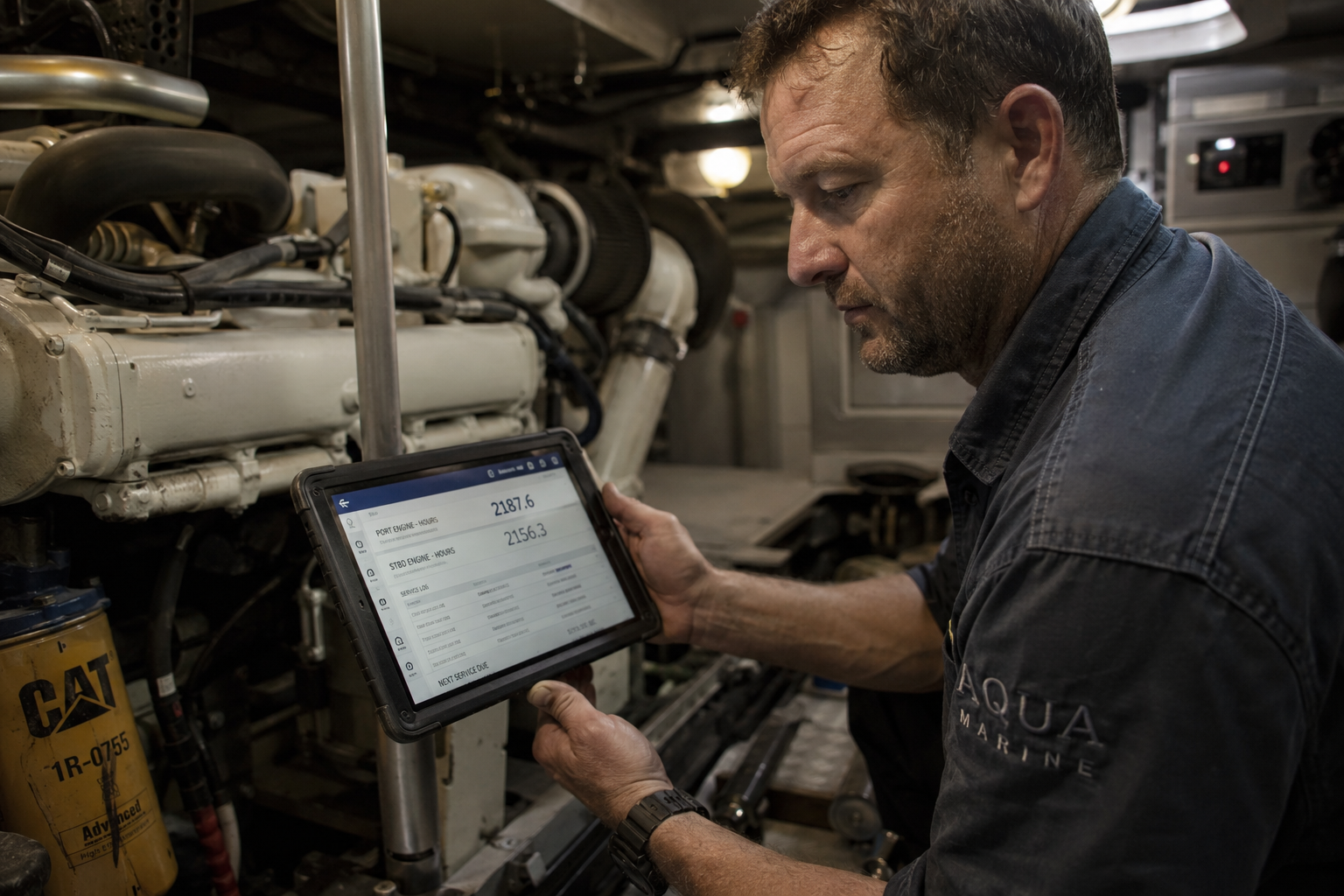
Your Vessel Is Generating More Data Than You Know What to Do With. Here's the Problem.
Most vessel owners know their boats. They know the sounds each engine makes, the service intervals for the raw water pump, the quirks of the generator in cold weather. That knowledge lives in their heads, in the heads of their captains, and sometimes in a handwritten log somewhere below decks.
But here's the uncomfortable truth: all that knowledge has a shelf life. When it walks off your vessel - in the form of a departing captain, a forgotten binder, or a memory that simply fades - it takes your vessel's maintenance history with it.
This isn't a niche problem. According to maintenance industry data compiled by UpKeep, companies using a centralized digital maintenance management system report major productivity gains over those relying on manual processes - and each dollar spent on planned maintenance saves an average of five in downstream repair costs. The data is there. The problem is that most operators are not capturing it - and the maritime industry is no exception.
The Data Your Vessel Is Already Producing
Modern vessels - even recreational cruisers and mid-size yachts - generate an enormous amount of operationally valuable information every time they leave the dock: engine hours, temperature trends, and RPM patterns; fuel consumption over time; bilge pump activity; battery bank charge cycles; generator run hours; the complete timeline of every service, inspection, and repair ever performed.
The challenge is not creating this data. It's capturing it in a way that's searchable, auditable, and actually useful for making decisions. According to Wärtsilä, one of the world's leading maritime technology companies, big data in vessel operations "remains an untapped opportunity" for the vast majority of owners and operators. The data that could predict failures, optimize service intervals, and extend vessel life is sitting idle instead.
What Happens When the Data Disappears
The maritime industry learns this lesson quietly, in ways that rarely make headlines: a routine haul-out that becomes a surprise repower because nobody tracked engine hours properly; a raw water impeller that fails mid-passage because the last service was never documented; a buyer who walks away from a pre-purchase survey because the maintenance records are incomplete.
These are not freak events. They are the predictable result of running a vessel on institutional memory rather than documented data. And they are almost entirely preventable.
The Shift From Records to Intelligence
The value of capturing vessel data goes beyond avoiding breakdowns. When maintenance history is centralized and organized, it starts to reveal patterns: which systems need more attention in saltwater environments vs. freshwater, how different usage profiles affect engine wear, when components are approaching end-of-service-life based on actual hours rather than calendar assumptions.
This is the shift from reactive recordkeeping to genuine operational intelligence. It's the same philosophy that transformed maintenance in aviation - where documented data is not optional, and where maintenance decisions are made on evidence, not instinct. That aviation-grade discipline is the foundation Vessel Vanguard was built on, and it applies just as powerfully to a 45-foot trawler as it does to a commercial fleet.
The maritime analytics market reflects where the industry is heading: valued at $1.62 billion in 2026 and growing at a CAGR of nearly 10% through 2031. The operators investing in this infrastructure now will have a significant advantage over those who wait.
How to Start Closing the Gap
You do not need a large fleet or a dedicated IT team to start capturing and using vessel data effectively. The first step is moving off paper and into a centralized digital system where every service, inspection, and work order is logged against a specific vessel.
From there, the data starts working for you. Upcoming service intervals surface automatically. Equipment histories become portable and permanent. If something does go wrong, you have a complete picture of what was done, when it was done, and what was found.
Vessel Vanguard was built to close this gap - for single vessels, private fleets, and commercial operators alike. Because the most valuable data your vessel has is only valuable if you're capturing it.
Frequently asked questions
What data should vessel owners be tracking?
Vessel owners should track engine hours and temperature trends, fuel consumption, bilge pump activity, battery charge cycles, generator run hours, and the complete history of all services, inspections, and repairs. This data enables smarter maintenance decisions and provides documentation for insurance, resale, and regulatory purposes.
Why is vessel maintenance data important?
Vessel maintenance data helps prevent unexpected breakdowns by identifying patterns before they become failures. It also protects vessel value, supports regulatory compliance, and dramatically reduces the likelihood of costly emergency repairs.
What is a vessel maintenance management system?
A vessel maintenance management system is a digital platform for tracking maintenance schedules, work orders, service history, and inspection records in one place. Research shows that 80% of companies using a centralized digital maintenance system report greater operational productivity compared to manual methods.
How does poor record-keeping affect vessel resale value?
Incomplete maintenance records are one of the most common reasons pre-purchase surveys stall or buyers negotiate downward. A documented service history demonstrates that the vessel has been properly maintained and removes a major source of uncertainty for prospective buyers.
How does Vessel Vanguard help vessel owners capture and use their maintenance data?
Vessel Vanguard centralizes all vessel maintenance records - including service logs, scheduled maintenance, work orders, and inspection history - in one digital platform. This gives vessel owners and operators a searchable, auditable record of every activity across their fleet.
Ready to modernize your vessel operations?
See how Vessel Vanguard helps marine operators stay compliant, reduce downtime, and run more efficiently.
Book a Demo