
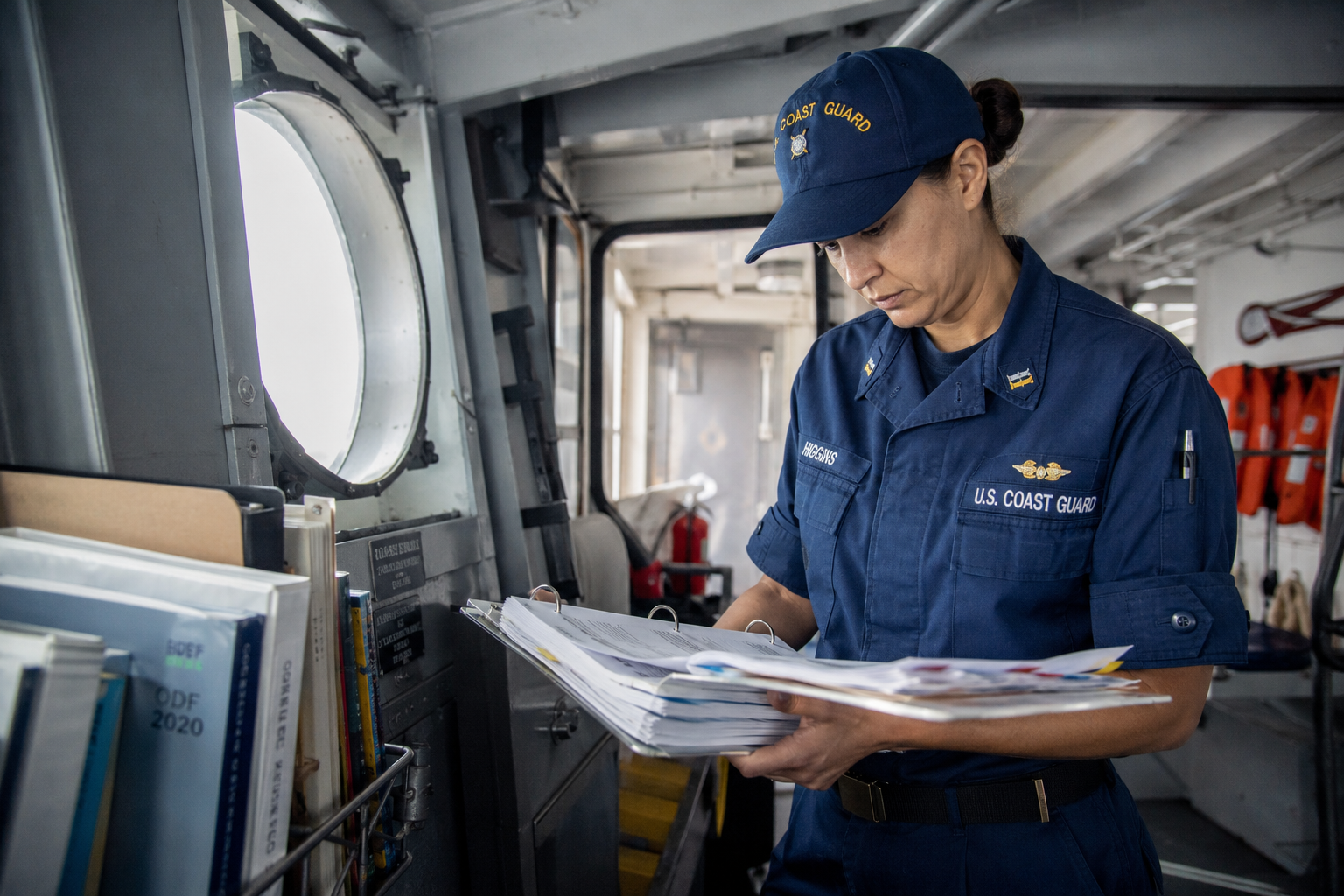
The USCG Is Modernizing Commercial Vessel Inspections. Is Your Documentation Ready?
For most commercial vessel operators, regulatory compliance is a reactive exercise. An inspection comes up on the calendar, you pull together your documentation, you get through it, and you move on. The process works - until it doesn't.
The U.S. Coast Guard is in the middle of a significant rethink of how commercial vessel inspections should work, and the direction they're heading has direct implications for how operators document and manage their maintenance programs. If you operate inspected vessels and you're still running on paper logs or informal records, now is the time to pay attention.
What Is the Streamlined Inspection Program?
The Streamlined Inspection Program (SIP), governed by NVIC 02-99, is a voluntary USCG program that allows qualifying commercial vessel operators to manage their own inspection and maintenance schedules under a company-developed plan - rather than waiting for a Coast Guard marine inspector to identify issues. Participating companies are expected to maintain a "continual state of compliance," not just compliance on inspection day.
Since its creation in 1997, SIP has been underutilized relative to its potential. Operators who have engaged with it - like BB Riverboats in Cincinnati, a program participant since the beginning - report that it builds inspector trust and keeps fleets consistently ahead of the compliance curve.
Why the USCG Is Revisiting It Now
In February 2026, the USCG issued a Request for Information (Docket USCG-2026-0041) to modernize the SIP in response to Executive Order 14269, "Restoring America's Maritime Dominance." The RFI specifically asked the maritime industry how digital tools - electronic recordkeeping, reliability sensor data, and automated reporting - are being used to support inspection and maintenance programs.
Among the direct questions posed in the public docket:
How does your company use electronic recordkeeping or automated reporting to document vessel inspections and maintenance?
How can digital tools be integrated into the SIP to improve efficiency, transparency, and safety?
What best practices has your company developed for leveraging technology to maintain a continual state of compliance?
These questions reflect a meaningful shift in how the USCG views the relationship between technology and regulatory compliance. Digital maintenance systems are moving from "nice to have" to expected.
What This Means for Your Fleet
Whether your vessels participate in SIP or are subject to traditional USCG inspection under Subchapter K, Subchapter T, or another inspected category, the direction is clear: organized, auditable, digital maintenance records are becoming the baseline expectation.
Operators who can present a digital maintenance history - documenting every inspection, every corrective action, every scheduled service - are in a fundamentally different position than those with paper logs or nothing at all. They can demonstrate a continual state of compliance, not just compliance on inspection day.
This is precisely the kind of documentation Vessel Vanguard is built to produce. The platform centralizes maintenance scheduling, work orders, inspection records, and service history in one auditable system - giving commercial operators the organized documentation the USCG is now actively asking for.
The Bottom Line for Commercial Vessel Operators
The SIP was always designed to reward proactive operators. The USCG's 2026 review is an opportunity for the program to evolve in a way that rewards digital operators too. Whether or not your vessels currently participate in SIP, having a documented, technology-driven maintenance program puts you in a stronger position for any inspection scenario.
Getting ahead of this shift is not a compliance exercise. It's a competitive advantage.
Frequently asked questions
What is the USCG Streamlined Inspection Program (SIP)?
The Streamlined Inspection Program is a voluntary USCG program under NVIC 02-99 that allows commercial vessel operators to conduct their own inspections and maintenance checks under a company-developed plan, with Coast Guard verification. It reduces regulatory burden while maintaining safety standards.
What does the 2026 USCG SIP review mean for vessel operators?
In February 2026, the USCG issued a Request for Information to modernize the SIP in response to Executive Order 14269 on restoring U.S. maritime dominance. The review focuses on how digital tools, electronic record keeping, and planned maintenance systems can be integrated into the inspection process.
Do I need to be enrolled in SIP to benefit from digital maintenance records?
No. Even if your vessels are subject to traditional USCG inspection rather than SIP, having organized digital maintenance records demonstrates compliance readiness and reduces risk during any inspection.
What types of vessels are covered under USCG inspection requirements?
USCG inspection requirements apply to a range of U.S.-flagged commercial vessels, including passenger vessels under Subchapter K and Subchapter T, as well as other vessel types listed under 46 U.S.C. 3301.
How does Vessel Vanguard support USCG SIP compliance?
Vessel Vanguard provides a centralized digital platform for maintenance scheduling, inspection records, work orders, and service history - exactly the kind of documented, auditable system the USCG is asking commercial vessel operators to develop and maintain.
Ready to modernize your vessel operations?
See how Vessel Vanguard helps marine operators stay compliant, reduce downtime, and run more efficiently.
Book a Demo