
5 Spring Boat Insurance Claims to Avoid This Season
Marine insurance adjusters review the same claims every spring. Flooded bilges, cracked manifolds, trailer blowouts on the highway - failures that cost vessel owners thousands of dollars and weeks of downtime, and that a thorough pre-launch inspection would have prevented in nearly every case. The following five categories account for the majority of springtime marine claims. All of them are avoidable.
Why Failed Underwater Hoses and Fittings Are the Leading Cause of Spring Marine Insurance Claims
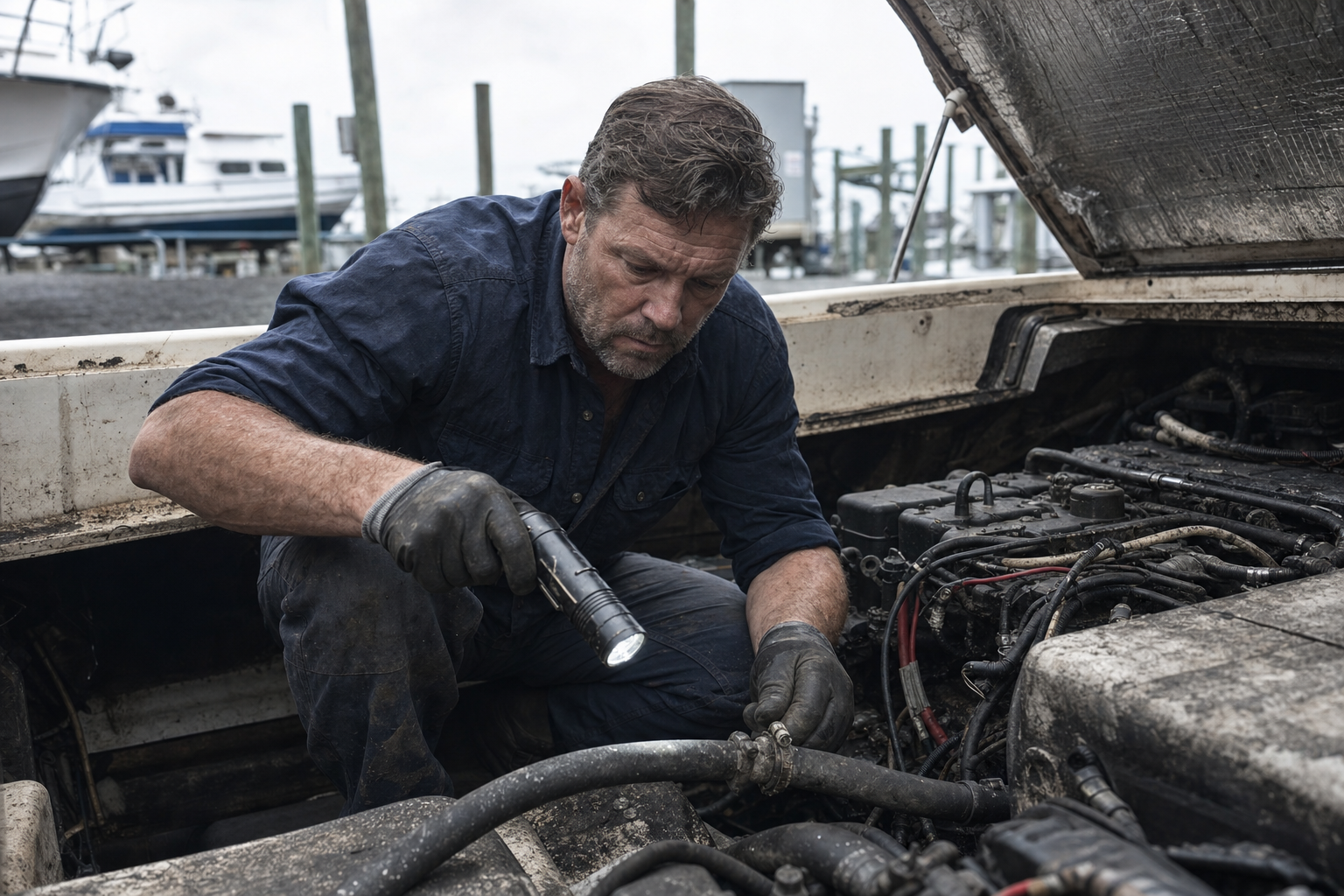
Aged underwater hoses and fittings are the single most common cause of spring marine insurance claims. Corroded thru-hull fittings, deteriorated hoses, rusty hose clamps, leaking stuffing boxes, and failed bellows are the top culprits - all vulnerable to the freeze-thaw cycle and months of winter dormancy.
Before launch, inspect every hose for age indicators: stiffness, cracking, bulging, or visible rot. Confirm every seacock moves freely through its full range. Test stuffing boxes - at rest they should weep no more than one drop per minute. Replace any bellows showing wear, and plan a replacement cycle of no more than five years for all underwater hose and fittings.
After your dockside inspection, get the boat in the water and check again. Water pressure reveals what dry inspection misses.
How a Damaged Impeller Becomes One of the Most Expensive Spring Claims
A worn or damaged raw water impeller is among the most expensive and avoidable causes of spring engine damage claims. Without a functioning impeller, an engine can overheat within minutes. Worse, a degraded impeller sheds debris into the cooling circuit - requiring complete system disassembly before the engine is safe to run again.
Inspect and replace the impeller before every launch. If it was not replaced at the end of last season, replace it now. A new impeller costs under $50 for most engines. An engine replacement can run into the tens of thousands.
While you are in the engine room, check manifolds for freeze cracks. Water expands nearly 10 percent when it freezes, and manifolds that held any residual water through winter are especially vulnerable.
Fuel System Deterioration: The Spring Fire and Explosion Risk Most Operators Underestimate
Fuel lines, fill hoses, and vent hoses that sit idle over winter develop brittleness, softness, and micro-cracking that create serious fire and explosion risk when fuel flow resumes. Squeeze-test hoses for stiffness or soft spots, look for visible cracking, and ensure all lines are properly supported with non-combustible clips. Any line showing deterioration should be replaced before launch, not deferred.
The DC electrical system is the other half of this equation. According to marine insurance claims data, DC electrical failures cause more than half of all boat fires. Inspect and tighten every electrical connection before the first start of the season - paying particular attention to both ends of battery cables. A loose connection that arcs briefly can generate enough heat to ignite nearby material.
Trailer Failures: The Most Common Boat Insurance Claim on the Road
Trailer tire failure is the leading cause of trailer-related marine insurance claims - and it is almost entirely preventable. Trailer tires degrade from the inside out. A tire can look perfectly sound while its internal structure has already failed from UV exposure and dry rot. Do not trust visual appearance alone.
Check the DOT date code stamped on the tire sidewall. If the tire is more than five years old, replace it regardless of how the tread looks. Inspect wheel bearings, all lighting, and the structural components of the frame - particularly tongue welds and frame connections for corrosion. A trailer failure at highway speed with a loaded vessel aboard is a safety event with potentially serious consequences.
Sailboat Rigging Failures: Lower Frequency, Higher Consequence
Rigging failures are less frequent than other spring claim categories, but their consequences are disproportionately severe. Rig loss can cause total vessel loss and serious crew injury. After winter storage, inspect chainplates, turnbuckles, swaged fittings, and stays thoroughly. Run a gloved hand down all standing rigging - if the glove catches on broken wire strands, the stay requires replacement before the boat leaves the dock.
Do not sail on rigging that has not been inspected since last season.
Spring Boat Pre-Launch Inspection Checklist
Inspect all underwater hoses, thru-hulls, and seacocks dockside - then again after launch
Replace the raw water impeller if it was not replaced at end of last season
Check manifolds for freeze cracks and inspect lower unit oil and fluid levels
Inspect all fuel lines, fill hoses, and vent hoses for brittleness or cracking
Inspect and tighten all DC electrical connections and battery cable terminals
Check trailer tires (DOT date, tread, sidewalls), bearings, and lighting
Inspect rigging, chainplates, and turnbuckles on all sailboats
Completing a commissioning inspection is only half the equation. Documenting it - by system, date, and finding - is what protects you if a claim does arise. Insurers apply seaworthiness conditions; a verifiable record of completed inspections is your strongest defense against a maintenance-based denial.
Frequently asked questions
What are the most common spring boat insurance claims?
The five most common spring marine insurance claims are: flooding and sinking from failed underwater hoses and fittings; engine overheating and damage from worn impellers; fuel system fires from deteriorated hoses; trailer tire failures; and sailboat rigging failures. All five are preventable with a thorough pre-launch inspection.
How often should I replace my boat's raw water impeller?
Most marine professionals recommend replacing the raw water impeller every one to two seasons, or at minimum each spring before the first launch. An impeller that fails underway can cause engine overheating within minutes and may shed debris into the cooling circuit requiring full system disassembly to clear.
What should I inspect before launching my boat in spring?
Before spring launch, inspect all underwater hoses, thru-hulls, and seacocks; the raw water impeller; manifolds and cooling circuit; all fuel lines and vent hoses; DC electrical connections and battery cable terminals; and all trailer components including tires, bearings, and lights. Repeat the underwater inspection once the boat is in the water.
Can poor maintenance records affect a boat insurance claim?
Yes. Marine insurance policies typically include seaworthiness conditions. A documented maintenance failure that directly contributes to a loss - such as a severely degraded impeller or unchecked thru-hull - may be classified as a maintenance issue rather than a covered event. Detailed maintenance records that document every inspection and service interval are your strongest protection against a claim denial.
How old should trailer tires be before replacement?
Trailer tires should be replaced after five years regardless of tread appearance. The DOT date code on the sidewall shows the manufacture date. Trailer tires degrade from UV exposure and dry rot even when tread appears intact, and failure under load at highway speeds creates serious risk to other road users as well as the vessel.
Ready to modernize your vessel operations?
See how Vessel Vanguard helps marine operators stay compliant, reduce downtime, and run more efficiently.
Book a Demo