
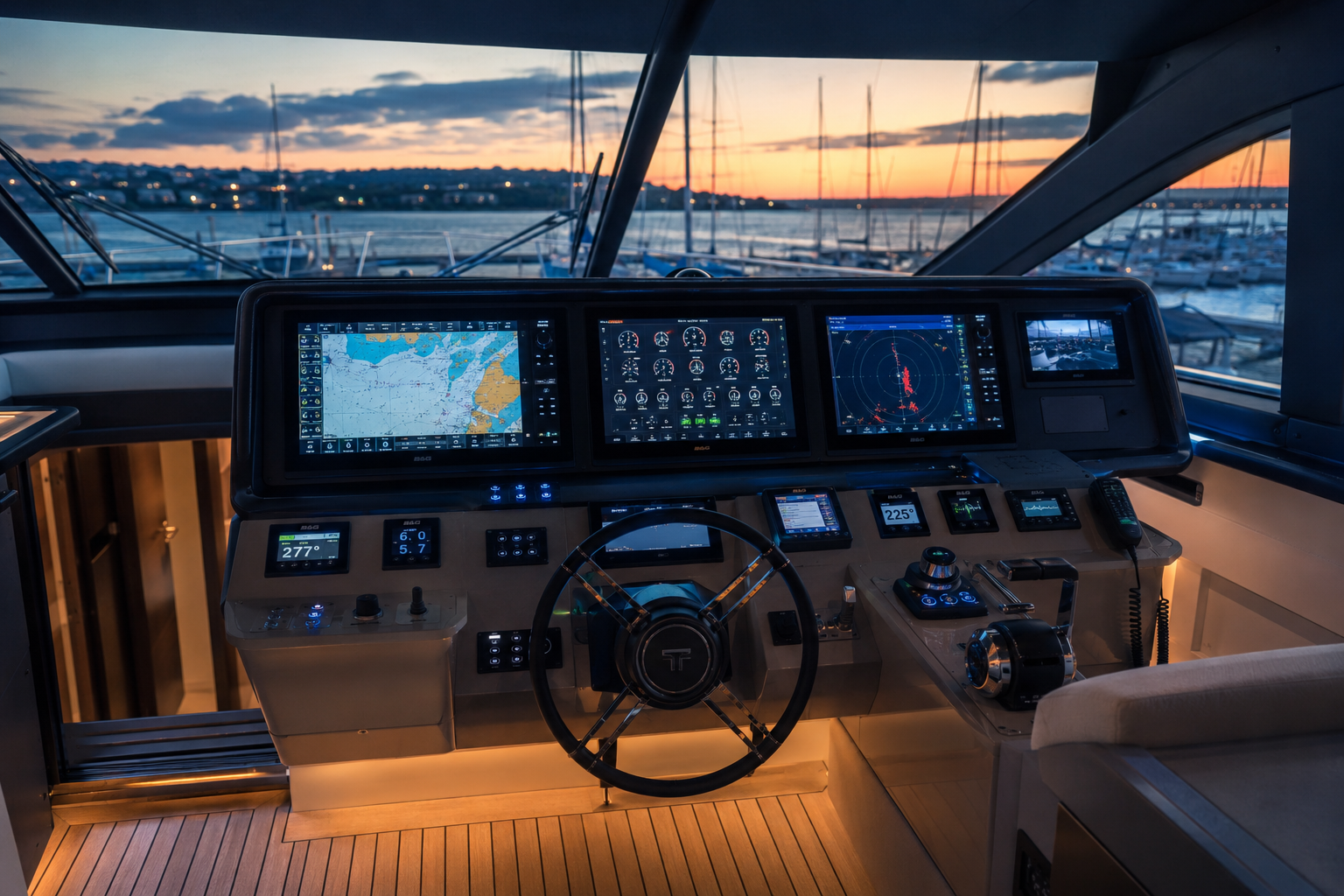
Your Yacht Is Getting Smarter. Is Your Maintenance Plan Keeping Up?
Starlink is now standard equipment on bluewater cruisers. Chartplotters share real-time data with autopilots, radar systems, and full NMEA 2000 networks. Generator load management, climate automation, and remote monitoring systems are showing up on vessels that would have had none of this five years ago.
The modern yacht is, in a very real sense, a connected computing platform that happens to float. That's genuinely exciting - it means better navigation, better situational awareness, better communications, and a fundamentally more capable vessel at sea.
But it also means something else: every smart system added to a vessel is a new system that needs to be maintained.
The Integration Problem Nobody Talks About
Concord Marine Electronics, who have installed and serviced hundreds of integrated systems across modern yachts, put it plainly in their 2026 trends report: "Most yacht technology problems in 2026 aren't caused by outdated equipment - they're caused by systems that were never designed to work together."
As yachts layer in Starlink connectivity, hybrid power management, centralized control systems, and full sensor networks, the complexity of what needs to be maintained grows exponentially. A Starlink terminal has a firmware update cycle. A chartplotter suite has calibration requirements. A power management system depends on accurate battery sensor data. When any of these systems quietly degrade rather than fail outright, the integrated system that depends on it degrades with it.
These degradations often don't announce themselves with an alarm. They show up as subtle navigation data inconsistencies, connectivity dropouts at inconvenient moments, or a generator that trips under load in conditions that never used to cause a problem. By the time the symptom is obvious, the root cause has often been developing for weeks.
What Technology Adoption Means for Maintenance Requirements
Concord's 2026 analysis identifies three core principles that have direct maintenance implications:
Integration is the core trend. Yacht systems are moving from collections of independent devices into tightly connected environments where performance depends on how well everything works together. This means a failure in one system can affect several others.
Connectivity drives everything. Internet connectivity now underpins navigation, monitoring, automation, entertainment, and communication. As Yachting Monthly notes, the shift to low-earth-orbit satellite platforms like Starlink has made always-on connectivity a realistic expectation at sea - which also means it's now infrastructure that needs to be maintained, not an optional extra.
Architecture determines longevity. How systems are designed, documented, and serviced determines how well they hold up over years of ownership. Complexity that isn't documented eventually becomes complexity that nobody can service.
What this means for maintenance is straightforward: you cannot maintain a complex, integrated system the same way you maintained a simpler one. Paper logs and captain memory were always imperfect. In the modern connected yacht, they're dangerously inadequate.
The Maintenance Gap in Smart Vessels
The irony of the smart yacht era is that as vessels become more capable of self-monitoring, the gap between what the vessel knows and what the operator has documented has often grown wider, not narrower.
Actisense, one of the leading manufacturers of NMEA 2000 networking hardware, notes that "regular maintenance of your NMEA 2000 network ensures the reliable operation of connected devices, prevents data transmission issues, and extends the life of your system." This applies equally to the firmware update cycles on nav suite components, the calibration schedules for integrated sensors, and the physical inspection of antenna mounts and cable connections on satellite systems.
Many modern onboard systems generate their own diagnostic data - engine management ECUs, battery monitors, bilge sensors, nav suite logs. But that data lives in the system that generated it, often inaccessible to the owner and impossible to correlate with the vessel's broader maintenance history.
This means a yacht can be equipped with Starlink, a full Garmin suite, an automated climate system, and a hybrid drive - and still have no organized record of when the raw water impeller was last serviced, whether the life raft is in certification, or who performed the last annual inspection of the electrical system.
The technology aboard the vessel and the documentation of the vessel have to grow together. One without the other creates a false sense of capability.
A Smarter Vessel Needs a Smarter Maintenance System
The solution requires intention, not complexity. A vessel's maintenance program needs to evolve alongside its technology:
Every new system added should be entered into the maintenance schedule with defined service intervals. Firmware update cycles and software-driven maintenance requirements should sit alongside traditional mechanical service, not in a separate mental folder. Connectivity-dependent systems should have documented verification schedules. And the integration architecture should be documented so that anyone maintaining the vessel in the future understands how systems interact.
PierShare's 2026 guide to bluewater sailing technology highlights exactly this point - that it's optimal to have documented redundancy plans alongside technology adoption. The same discipline that applies to safety backup systems applies to maintenance documentation.
Vessel Vanguard is built for exactly this kind of evolving, connected fleet. As vessels grow in complexity, the platform scales with them - tracking every system, every service interval, and every work order in one place. Whether it's the annual impeller check or the quarterly firmware verification on the radar suite, it lives in the same log, owned by the vessel, not by whoever happened to be aboard when it was last done.
The Vessels That Will Hold Their Value
The marine market has always rewarded well-documented vessels. As the technology aboard those vessels grows more complex and more expensive to repair or replace, that premium will only grow. A buyer doing due diligence on a smart, connected yacht will want to see a maintenance history that demonstrates the vessel's complex systems have been tracked and managed with the same rigor as its engines and hull. In the modern marine market, the value is in the documentation.
Frequently asked questions
What maintenance does a Starlink maritime system require?
Starlink maritime installations require periodic firmware updates, physical inspection of the antenna mount and cable connections, verification of network integration and routing settings, and ongoing monitoring of signal performance. These should be tracked in the vessel's maintenance log alongside traditional mechanical service items.
How does adding smart systems change vessel maintenance requirements?
Each new integrated system - whether navigation electronics, power management, connectivity hardware, or automation - adds its own maintenance requirements, including firmware update schedules, calibration checks, sensor verification, and hardware inspection intervals. A well-managed maintenance program accounts for all of them.
Why are integrated yacht systems harder to maintain than standalone ones?
Integrated systems depend on each other to function correctly. A degrading sensor, a misconfigured network, or an outdated firmware version in one system can affect the performance of connected systems throughout the vessel. This makes documented, systematic maintenance more important as integration grows, not less.
What yacht technology trends are shaping maintenance needs in 2026?
The core trends driving new maintenance requirements in 2026 include the widespread adoption of satellite connectivity (Starlink and similar platforms), fully integrated NMEA 2000 sensor networks, automated monitoring and control systems, and hybrid power management. Each adds new service requirements that must be tracked alongside traditional mechanical maintenance.
How does Vessel Vanguard support maintenance for technologically complex vessels?
Vessel Vanguard allows owners and operators to add every onboard system to a centralized maintenance schedule - from mechanical components to electronics and connectivity infrastructure. The platform tracks service intervals, sends automated alerts, generates work orders, and maintains a complete vessel history regardless of how sophisticated the vessel's systems become.
Ready to modernize your vessel operations?
See how Vessel Vanguard helps marine operators stay compliant, reduce downtime, and run more efficiently.
Book a Demo