
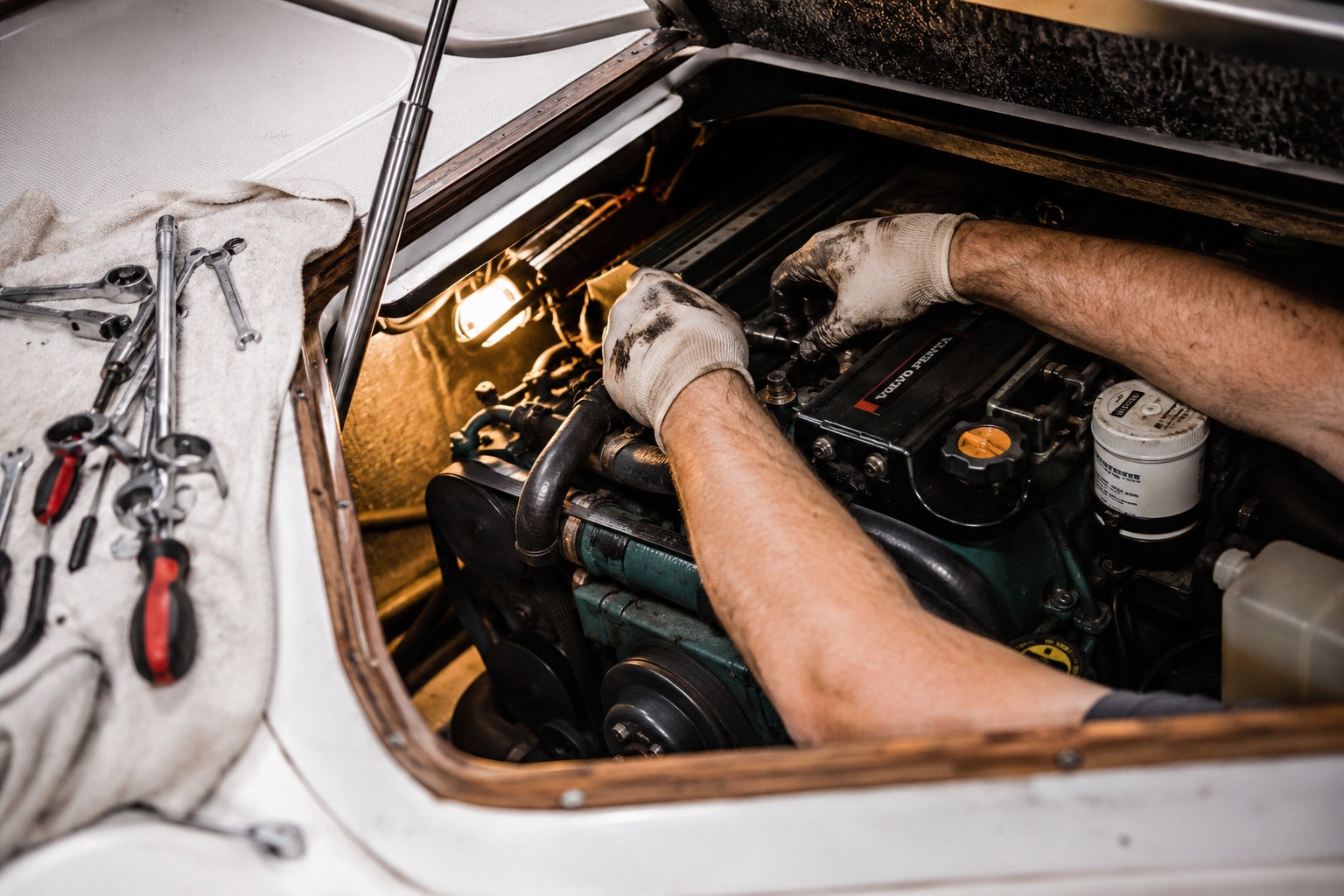
The Most Expensive Maintenance Strategy Is the One You Don't Have
There's a version of vessel maintenance that most boat owners know well: something breaks, you fix it. The engine warning light comes on, you call the yard. The generator runs rough, you cancel the trip and troubleshoot. The raw water pump gives out 60 miles offshore and you start running the numbers on a tow.
This is reactive maintenance. It's the default strategy for a surprising number of vessel owners - not because they don't care about their boats, but because they've never been given a better system.
The consequences of staying reactive are not just measured in repair bills. They're measured in missed trips, emergency yard fees, expedited parts shipping, and mechanical failures that happen at the worst possible moment - when you're off the dock, far from help, and responsible for people on board.
The maritime industry is in the middle of a significant shift away from this model, and the data behind that shift is not subtle.
What "Reactive" Is Actually Costing You
According to the U.S. Department of Energy's Operations & Maintenance Best Practices Guide, organizations that shift from reactive to planned maintenance programs see an estimated 12-18% reduction in overall maintenance costs - a benchmark confirmed by Pacific Northwest National Laboratory and widely cited across industrial maintenance literature. The same data shows that planned maintenance dramatically reduces the likelihood of catastrophic failures, which are the largest single cost driver in reactive-only programs.
UpKeep's maintenance statistics research adds another dimension: every dollar spent on preventive maintenance saves an average of five dollars in downstream repair costs. For vessels with expensive propulsion systems, generators, and complex electronics, that ratio is not theoretical - it shows up in every haul-out invoice, every emergency tow, and every parts rush order.
In the maritime sector specifically, the predictive maintenance market is projected to reach $3.06 billion by 2034, growing at a CAGR of 21.6% - a clear signal that the industry is investing heavily in moving away from reactive approaches.
The Three Maintenance Philosophies
Not all maintenance is created equal. The maritime industry broadly operates across three approaches.
Reactive maintenance addresses failures after they occur. It's the default for operators without a formal system, and it's the most expensive strategy over time because it combines repair costs with downtime and the cascading damage that often follows a failure.
Preventive (scheduled) maintenance operates on fixed time or usage intervals regardless of equipment condition. It's far better than reactive, but not perfectly efficient - DOE research shows approximately 30% of scheduled maintenance activities are performed before they're actually needed.
Predictive maintenance uses equipment data and condition monitoring to service components when they actually need it. It's the most efficient model available. While most private vessel owners won't run full sensor-based predictive analytics tomorrow, the practical path forward starts with disciplined preventive maintenance tracked in a digital system. That single step produces a dramatic improvement in both cost and reliability.
What a Maintenance Program Actually Looks Like
A well-run vessel maintenance program does not have to be complicated. At its core, it's four things:
A complete inventory of every system and component on the vessel with known service intervals
A running log of every service, inspection, and repair performed
Automated reminders when intervals are approaching based on calendar date or operating hours
A work order system that assigns, tracks, and documents corrective actions
This is the system that aviation has operated on for decades - and it's why commercial aircraft have extraordinary reliability records despite operating in one of the world's most demanding environments. Vessel Vanguard's technology lineage traces directly to aviation: the platform was built with aviation-grade maintenance discipline as its foundation, by a team with deep aviation software experience. The philosophy is simple - the rigor aviation applies to aircraft, applied to vessels.
The Compounding Benefits of Getting Ahead
The best time to set up a maintenance program is when you buy a vessel. The second-best time is right now.
Here's what changes when you make the shift: the failures that used to surprise you start happening less often. Inspections that used to reveal unexpected work start revealing expected work that was already on the schedule. Conversations with surveyors and insurers shift from explaining gaps to presenting complete records.
And the vessel holds its value - because documented maintenance history is one of the strongest contributors to resale value in the marine market. The vessels worth the most are not the ones that were never used. They're the ones that were well cared for, and can prove it.
Frequently asked questions
What is reactive maintenance in maritime?
Reactive maintenance is the practice of repairing vessel systems and components after they fail, rather than on a scheduled or condition-based basis. It is the most expensive maintenance approach over time due to higher repair costs, downtime, and cascading damage from unaddressed failures.
What is the difference between preventive and predictive vessel maintenance?
Preventive maintenance operates on fixed time or usage intervals regardless of equipment condition. Predictive maintenance uses condition data to service equipment only when it actually needs it. Most vessel owners benefit significantly from starting with a disciplined preventive system before moving toward predictive capabilities.
How much does reactive maintenance cost compared to planned maintenance?
Research shows companies using planned maintenance programs see 10-40% fewer reactive maintenance events and 12-18% overall cost savings compared to reactive-only approaches, according to U.S. Department of Energy benchmarks. The savings grow further as vessel systems become more complex and expensive.
What should a vessel maintenance schedule include?
A vessel maintenance schedule should list every system and component aboard with defined service intervals based on manufacturer recommendations, operating hours, or calendar time. This includes engine and cooling systems, electrical and fuel systems, safety equipment, running gear, and hull inspections.
How does Vessel Vanguard support planned vessel maintenance?
Vessel Vanguard provides a digital platform for building and managing a complete vessel maintenance schedule. The system tracks service intervals, sends automated alerts when maintenance is due, generates work orders, and maintains a full service history - enabling vessel owners to move from reactive to proactive maintenance with minimal administrative overhead.
Ready to modernize your vessel operations?
See how Vessel Vanguard helps marine operators stay compliant, reduce downtime, and run more efficiently.
Book a Demo