
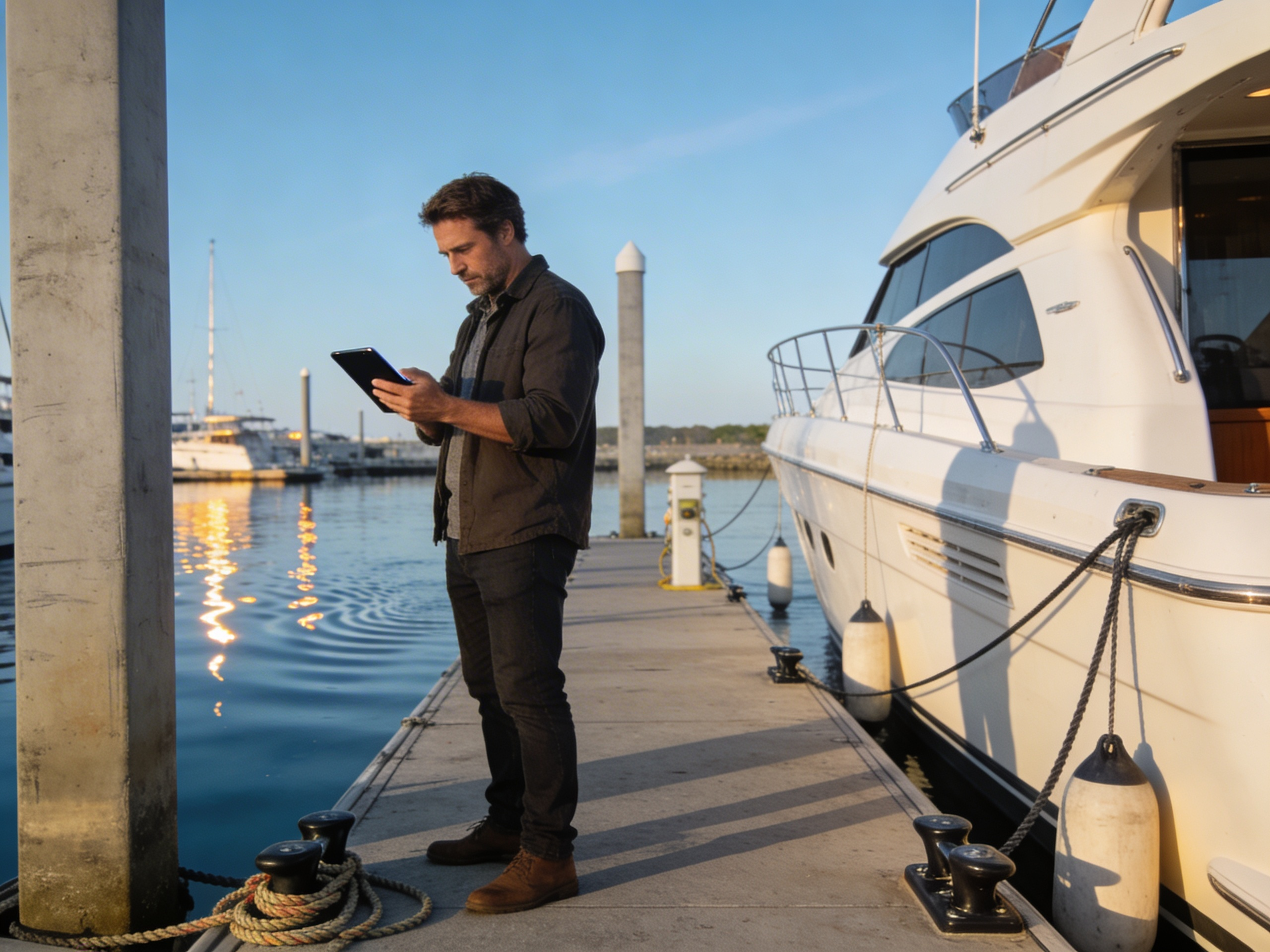
Preparing Your Vessel for Hurricane Season: The Documentation That Actually Matters
Hurricane season opens June 1. By July, marine insurance offices are already processing the year's first storm claims. The vessel owners and fleet managers who recover fastest - and who actually get paid close to what their boats were worth - are not the ones with the best dock lines. They are the ones with the best documentation.
Every experienced adjuster will tell you the same thing: the single biggest driver of claim outcome in a major storm is not how the vessel was secured. It is what the owner can prove afterward.
What Your Insurer Actually Wants
In a post-storm environment, a marine insurance adjuster is managing dozens to hundreds of claims simultaneously, many on vessels that no longer exist in their original form. The claim that gets settled promptly and favorably is the one that arrives with its own evidence package already built. Every other claim waits.
Proof of current condition before the storm. Dated photos of the hull, deck, interior, engine compartment, and electronics from within the last 60 days. An adjuster cannot pay for damage they cannot see a before-picture of.
Proof of maintenance. A maintenance record showing the vessel was being actively cared for. Policies routinely carry seaworthiness conditions, and a documented maintenance history resolves any question about whether those conditions were met. Vessel Vanguard's preventive maintenance logs, work order history, and equipment service records provide exactly this in an exportable format.
Proof of upgrades. Receipts and documentation for anything added since the policy was written - electronics, safety gear, tender, outboard. Every upgrade without documentation is an upgrade you will not be paid for.
Proof of storm preparation. Documentation of the hurricane plan you actually executed: lines doubled, canvas removed, electronics secured, batteries disconnected. Dated photos taken before landfall carry more weight with an adjuster than any written statement taken after.
Proof of value. A survey from within the last few years, or comparable sales records, or both. For vessels over 10 years old, this is often the single most important document in the file.
Most vessel owners have pieces of this. Very few have it organized in a way that is producible after a storm - when the marina may be closed, phones may be damaged, and email attachments may be trapped on a device that went underwater.
The Five Records That Matter Most
1. A Current Walk-Around Photo Set
Take photos from every angle - dock side, offshore side, bow, stern, cockpit, cabin, engine compartment, electronics panel, and any recent upgrades. Date them. Store them somewhere that survives if the vessel does not - a cloud-based system, not a local phone or laptop. A walk-around done once a year, 30 days before hurricane season, is one of the highest-leverage hours a vessel owner or fleet manager spends all year.
2. A Maintenance History
Oil changes, zinc replacements, bottom paint, engine service, canvas work. The history does not have to be exhaustive - it has to be continuous. Vessel Vanguard's maintenance log creates this record automatically as work is entered, with dates, technician notes, and photo attachments. That continuous record is a provable claim. Memory is not.
3. Receipts for Post-Policy Upgrades
Most policies are written at purchase. Most owners keep upgrading. Every upgrade without documentation is money left on the table after a storm. New chartplotter, new autopilot, new radar, new VHF, new dinghy - save the receipt and attach it to the vessel record. The owner who produces 15 itemized upgrade receipts consistently recovers more than the one who describes those upgrades from memory to a skeptical adjuster.
4. A Written Hurricane Plan and Evidence You Followed It
Your policy likely requires a hurricane plan. It does not need to be elaborate - it needs to be specific, realistic, and demonstrably executed. Photos of doubled lines, stripped canvas, and secured electronics, dated before landfall, are worth more than any plan that exists only on paper.
5. A Recent Survey or Value Record
For vessels over 10 years old, a recent survey is often the difference between a full settlement and a drawn-out negotiation. If a current survey is not practical, comparable sales evidence, upgrade receipts, and dated condition photos can carry similar weight. The goal is to give the adjuster every possible piece of evidence about what the vessel was worth before the storm.
FEMA and Disaster-Specific Considerations
Major storms often unlock federal disaster assistance beyond standard insurance - small-craft harbor reconstruction, marina recovery grants, and sometimes individual assistance for personal property losses. FEMA and state emergency management programs have their own documentation requirements, which differ from insurance in specific ways. Dated before-storm records satisfy both contexts. After-storm records satisfy neither.
Save everything related to the storm: track images from the National Hurricane Center, mandatory evacuation notices, marina closure notifications. These become supporting evidence for claims you may not know you need to file until weeks after the event.
Where to Store the Documentation
The most common mistake is saving records locally. When storm surge takes the vessel or the dock, local files go with them. A cloud-based vessel management platform - one that stores maintenance records, voyage logs, photos, and equipment documentation per vessel, accessible from any device - gives you the one capability paper cannot provide: survivability.
Vessel Vanguard's per-vessel records and Smart Reports export function give you a complete, organized documentation package that can be produced anywhere, from any device, the week after a storm. That is not a convenience feature. It is a claim recovery tool.
A 60-Minute Pre-Season Checklist
Step 1 - Walk around your vessel with your phone and take 30 to 50 date-stamped photos covering every angle, every compartment, and every piece of added equipment.
Step 2 - Photograph every upgrade receipt you can locate. Save them attached to the vessel record, organized by category.
Step 3 - Pull your current insurance policy and verify the hurricane plan and named-storm requirements. Confirm exactly what the policy requires you to do and by what trigger.
Step 4 - Update or create your written hurricane plan and save it in the same location as everything else.
Step 5 - Export and back up the complete documentation package to a cloud location accessible from any device.
The Bottom Line
Hurricane preparation is mostly physical - lines, chafe gear, stripped canvas, secured hatches. But the part that determines what your vessel is actually worth after the storm is documentary. Dock lines decide whether the boat survives. Documentation decides whether you are made whole.
The time to build the record is now, before June 1, while the sky is still blue and the boat is still dry.
Frequently asked questions
When should I start hurricane-season documentation?
Thirty to sixty days before June 1 is the practical window. That timeline allows a complete walk-around, upgrade receipt collection, policy verification, and cloud backup without rushing. Leaving it to the week a named storm is forecast is how vessels end up underinsured after the fact.
What photos do insurance adjusters actually want to see?
Dated photos showing the full hull from every angle, the interior including cabin and cockpit, the engine compartment, the electronics panel, and any added equipment. Adjusters are establishing the before-state of the vessel, and comprehensive photos from 30 to 60 days before the storm are the cleanest evidence for that.
Do I need a marine survey for an insurance claim?
For vessels over 10 years old, a recent survey is often the difference between a full settlement and a drawn-out negotiation. For newer vessels, strong maintenance documentation, upgrade receipts, and current condition photos can substitute. When in doubt, a survey going into hurricane season is usually a sound investment.
What should a vessel hurricane plan actually include?
Where the vessel will be positioned during the storm, what will be removed or secured, who will execute the plan, and the trigger criteria for activation. The plan an adjuster values is specific and realistic - not aspirational.
How do FEMA and insurance documentation requirements differ?
There is substantial overlap but not identity. Insurance focuses on condition, value, and policy compliance. FEMA and state programs may require additional evidence of residency, marina affiliation, or personal property loss. Dated before-storm records satisfy both. After-storm records satisfy neither.
What is the single biggest documentation mistake vessel owners make before hurricane season?
Saving records only on a local device. When the storm takes the vessel, local records go with it. A cloud-based backup - organized per vessel, exportable, accessible from any device - is the one feature that makes every other piece of documentation actually useful when you need it most.
Ready to modernize your vessel operations?
See how Vessel Vanguard helps marine operators stay compliant, reduce downtime, and run more efficiently.
Book a Demo