
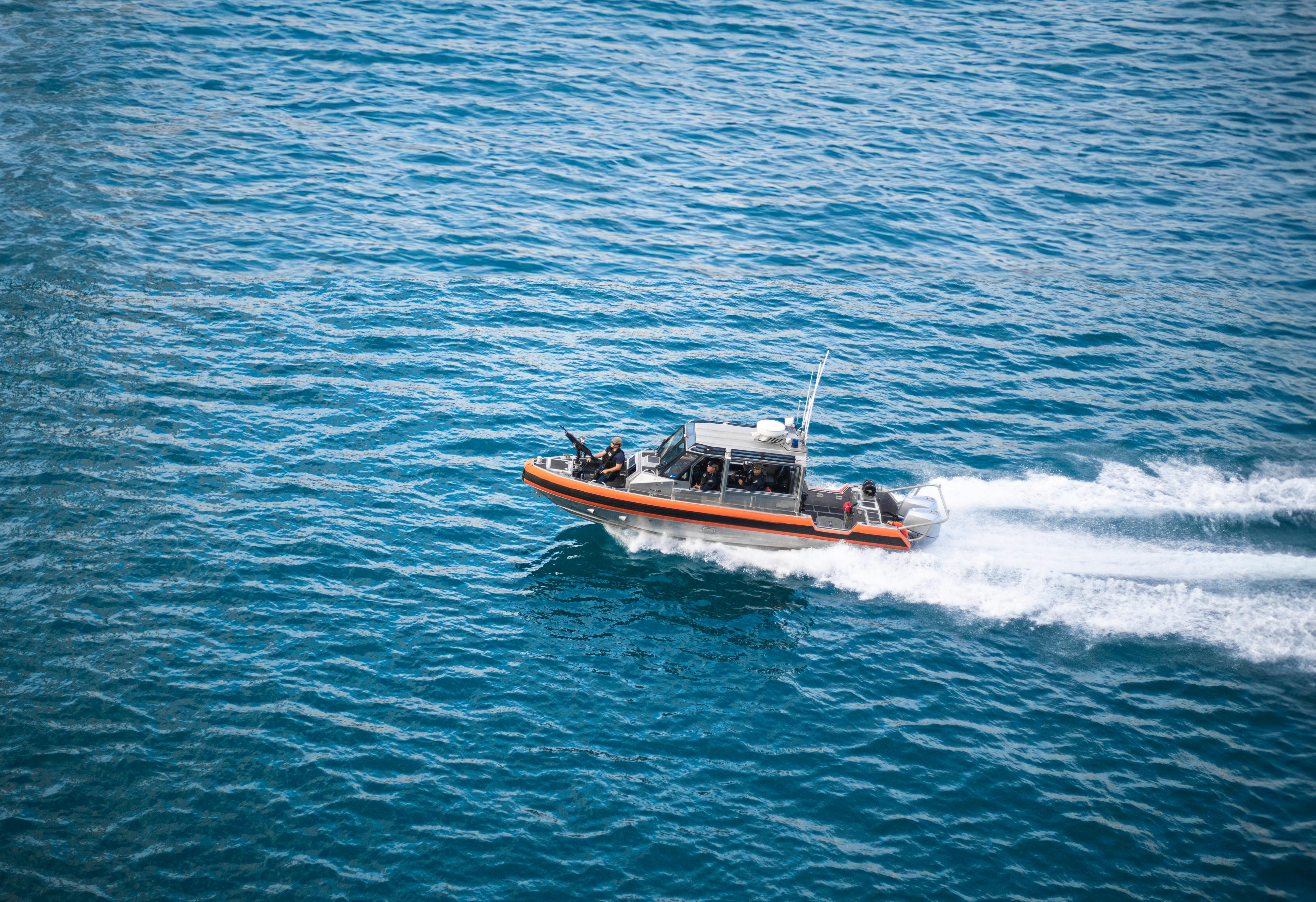
How Coast Guard Auxiliary and Harbor Patrol Units Are Modernizing Fleet Documentation
The boats are immaculate. The training is current. The crew is sharp. And somewhere in a three-ring binder, the documentation that proves it all is slowly coming apart.
Coast Guard Auxiliary flotillas and harbor patrol units run some of the most mission-ready small craft in the country. They also run some of the oldest documentation practices - paper logbooks, loose-leaf maintenance records, sticky notes on certifications, and a patchwork of spreadsheets that live on one person's laptop. For a fleet manager responsible for five, eight, or twelve vessels, that patchwork is not just inconvenient. It is a liability that compounds every time a new coxswain takes over, every time an inspector arrives unannounced, and every time a vessel that was "fine last month" turns out not to be.
Why the Paper System Is Running Out of Runway
Fleet managers in Auxiliary flotillas and harbor patrol organizations face a documentation challenge that is structurally different from commercial operators - but no less demanding. They operate under strict oversight from USCG directives, state statutes, and local ordinances, but with volunteer or lean staff crews, tight budgets, and boats that rotate between trailers, slips, and covered storage. Records have to be inspection-grade, but the person maintaining them is usually the same person who drives the boat.
Inspection scope has expanded. Auditors today ask for drill logs, certification currency records, preventive maintenance cycles, and battery and fuel system checks alongside the standard hull and engine records. A file folder that covered an inspection five years ago will not carry an inspection today.
Crew turnover is faster. New volunteers or reassigned personnel rarely inherit the previous coxswain's filing logic. Institutional knowledge walks out the door with the person who had it, and the fleet manager spends weeks reconstructing what one person kept in their head.
Event response tempo is higher. Units are responding to more weather events, search-and-rescue activations, and waterway enforcement taskings - each of which generates documentation that has to be reconciled later. For a fleet manager running multiple hulls, the backlog never shrinks because the next activation is always coming.
The result is a fleet that is perfectly capable on the water but perpetually behind on paper - and a fleet manager who cannot answer the most basic inspection question - what is the current status of every hull in your fleet - without spending an afternoon looking for it.
What a Modernized Fleet Documentation System Actually Does
The shift to digital fleet management is not about buying an enterprise platform and rebuilding everything from scratch. It is about giving the fleet manager a single, accurate picture of every hull, and making that picture producible on demand.
Traffic Light Fleet Status does exactly this. Instead of chasing records across binders, inboxes, and shared drives, the fleet manager sees every vessel's readiness at a glance - green for mission-ready, amber for issues pending, red for grounded. That single view replaces the Sunday-night scramble before Monday's inspection.
Annual Survey Tracking eliminates the most common inspection surprise in small-unit operations: the coxswain who did not know their certification lapsed. Automated alerts at 90, 60, and 30 days before expiration go to both the individual and the supervising officer. Certification currency stops being a discovery and starts being a managed schedule.
MOSS, SMS & SOP Compliance keeps the operation's safety and compliance documentation in one place - policies, procedures, drill records, and incident reports - all version-controlled and retrievable without archaeology. For a harbor patrol unit managing compliance across multiple jurisdictions, this is the difference between a 15-minute inspection and a three-hour one.
Smart Reports produce the exportable inspection packages that actually end inspections quickly. When the inspector asks for the last 12 months of activity on hull 7, the fleet manager exports a clean PDF in five minutes. That single capability is what turns an inspection from a scramble into a conversation.
Where Fleet Managers Commonly Fall Short
Three patterns repeat across Auxiliary and harbor patrol operations of every size. The first is fragmentation - records exist, but they live across so many locations that producing anything specific takes half a day. The second is currency blindness - each crew member knows their own expiration dates, but the fleet manager has no fleet-wide view. The third is incident followup failure - the event gets reported, the corrective action happens, and the closeout that would satisfy an inspector never gets written down.
None of these are discipline problems. They are structural ones. And structural problems are exactly the kind that better tooling solves.
A Realistic Path Forward
Step 1 - Pick one hull and run parallel systems for 30 days. Paper and digital side by side. You will learn more in that month than in any planning session.
Step 2 - Start with certifications and preventive maintenance. These are the records that create the most inspection exposure. Get those right before adding drill logs, incident reports, and inventory.
Step 3 - Assign one data steward. Not the most senior person - the most organized one. Documentation systems fail when ownership is shared by everyone.
Step 4 - Export an inspection package at the end of month one. If it is clean and inspection-ready, you have proven the model. If not, you have found exactly what to fix before scaling to the full fleet.
The Readiness Upgrade Inside the Paperwork Upgrade
Fleet managers who make this transition consistently report the same secondary benefit: they catch maintenance issues earlier. When the preventive maintenance schedule lives in a phone instead of a binder, the next service is visible before the boat needs it. When certification alerts fire 30 days early instead of at the dock, renewals happen on the crew's schedule instead of the inspector's. When every incident generates a tracked corrective action that closes on record, the pattern of what keeps going wrong becomes visible - and fixable.
The documentation win is real. The readiness win is bigger. For Coast Guard Auxiliary flotillas and harbor patrol units, modernizing fleet documentation is not about making compliance easier. It is about converting hours of quarterly paperwork into minutes of continuous record-keeping - and making every one of those minutes count toward a boat that is ready when the call comes in.
Frequently asked questions
What records are most commonly missing during USCG Auxiliary or harbor patrol inspections?
Crew certification currency, preventive maintenance completion evidence, and drill log closeouts are the three categories most often flagged. All three share a common root cause - they require continuous upkeep, and paper systems reflect whoever was most recently responsible rather than the current state of the fleet.
How long does it take to move a small flotilla off paper records?
Fleet managers who run a single-hull pilot for 30 days and expand from there typically reach full fleet coverage within three to four months. Trying to convert the entire fleet simultaneously almost always takes longer and produces uneven adoption.
What is the biggest adoption barrier when introducing digital documentation to a volunteer crew?
The perception that it adds work rather than replaces it. Units that introduce the tool alongside a workflow the crew already finds useful - like a shared maintenance calendar or defect log - see much higher adoption than units that roll it out as a compliance mandate.
Do digital documentation tools satisfy USCG inspection requirements for Auxiliary units?
The regulatory requirement is accurate, current, retrievable records - not a specific format. Digital tools satisfy this as long as records can be produced in a format the inspector can review, which in practice means a clean PDF export or on-screen access during the inspection.
What happens to existing paper records during the transition?
Best practice is to scan and attach historical records to the new digital file as reference material. The goal is continuity for future inspections, not a complete re-entry of past documentation.
How does digital documentation help a fleet manager prepare for a surprise inspection?
A surprise inspection is a zero-notice export. If the fleet manager can produce the last 12 months of maintenance, training, and incident records in 15 minutes, the fleet is ready. The preparation is not something that happens before an inspection - it happens every time a record gets updated in real time.
Ready to modernize your vessel operations?
See how Vessel Vanguard helps marine operators stay compliant, reduce downtime, and run more efficiently.
Book a Demo