
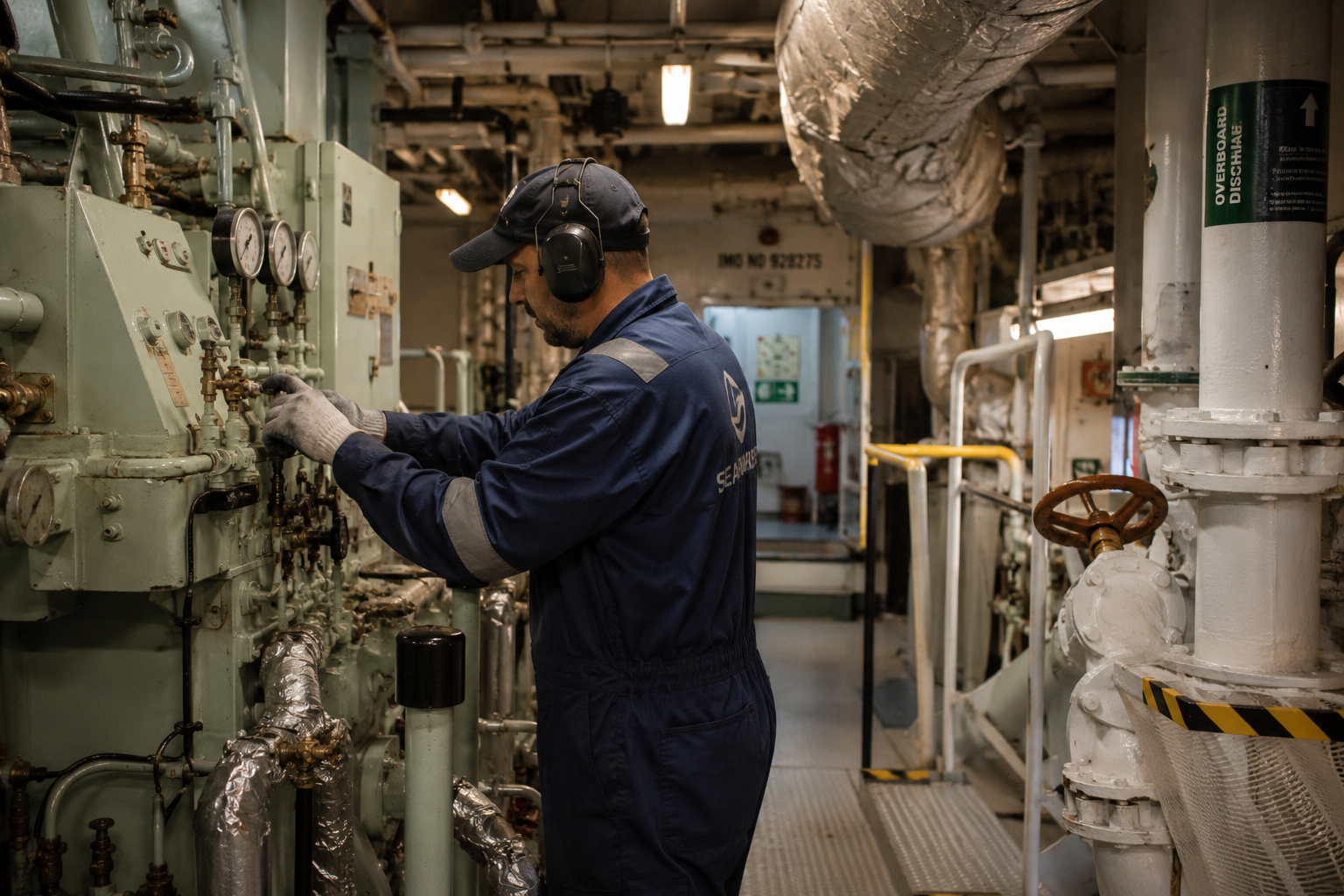
Environmental Compliance on Commercial Vessels: Closing the Gap Between Policy and Onboard Practice
Most commercial vessel operators understand their environmental obligations. Ballast water management systems are installed. Procedures are documented. Policies are in place.
The compliance gap is not in the policy. It is in the space between the documented requirement and what actually happens at the vessel level on any given day.
Environmental enforcement is tightening. Port State Control inspections are testing operational familiarity, not just documentation. Charterers and stakeholders are placing increasing weight on demonstrable compliance - records that show procedures are understood and consistently applied, not just filed.
Operators who stay ahead of this are not necessarily better-resourced. They run tighter systems.
Why Environmental Compliance Gaps Happen
The most consistent pattern across commercial fleets is this: management-level awareness of environmental requirements does not automatically translate into onboard execution.
The breakdown usually comes down to one or more of the following:
Ballast water management systems that are installed but inconsistently operated. Equipment is commissioned, but maintenance intervals slip. Testing is assumed rather than verified. When an inspector asks for documentation of recent system performance, there is nothing to produce.
Logs completed after the fact rather than in real time. Retroactive logging is one of the fastest ways to create a compliance liability. It introduces inaccuracies, creates gaps, and is often identifiable during an inspection.
Routine operations mistaken for compliance. Doing the same thing every week is not the same as verifying that the procedure still meets the requirement. Without periodic review, operators can fall out of compliance without realizing it.
Shoreside and onboard operating from different understandings. Management assumes procedures are being followed as written. Onboard crews may be working from outdated versions or filling gaps informally. The disconnect only surfaces when it is too late.
Where Environmental Compliance Scrutiny Is Increasing
The regulatory and commercial environment has shifted toward demonstrable compliance. Having procedures on file satisfies a basic requirement. Demonstrating that those procedures are understood, applied, and consistently documented is now the expectation - from regulators and commercial partners alike.
Port State Control (PSC) inspections are placing greater weight on operational familiarity. Inspectors are not just reviewing paperwork - they are testing whether crew members understand why a procedure exists. An inability to explain the basis for an environmental control is treated as a deficiency regardless of whether the documentation is complete.
Environmental records and system performance data are receiving closer scrutiny. The quality of what is recorded, and when it was recorded, tells an inspector a great deal about how seriously a vessel takes its compliance obligations.
Charterer and stakeholder ESG expectations have introduced a commercial compliance dimension. Environmental credibility is increasingly part of the vetting process for charters and commercial relationships. Operators who cannot produce clean, accurate environmental records on short notice face a competitive disadvantage.
What Separates Operators Who Stay Ahead
Operators who consistently pass inspections and commercial vettings without surprises tend to share a few common practices.
Crews understand the why, not just the what. When a crew member knows the purpose of a ballast water procedure - not just that it exists in the manual - execution is more consistent. Compliance becomes an operational standard, not a documentation exercise.
Maintenance and testing of environmental systems is tracked and verifiable. Ballast water management systems, emissions-related equipment, and other environmental controls require active maintenance management. The operators who demonstrate compliance best treat this equipment the same way they treat propulsion: on a scheduled, documented maintenance cycle.
Records are reviewed internally before an inspector does it first. Spot-checking logs and environmental records against actual operations is one of the most effective compliance tools available. It identifies gaps while there is still time to address them.
Shoreside expectations and onboard practices are aligned through structured systems. Not an updated SOP emailed to the vessel - a shared platform where tasks are assigned, completed, and documented in one place, visible to both sides in real time.
How Vessel Vanguard Supports Environmental Compliance
Environmental compliance on commercial vessels is an operational discipline, not just a documentation requirement. The records that hold up in an inspection reflect what actually happened onboard - logged in real time, by the people doing the work.
Vessel Vanguard gives commercial fleet operators a centralized platform for maintenance scheduling, work order tracking, digital logbooks, and compliance documentation. Environmental system maintenance tasks, testing records, and related logs are managed within the same system as broader vessel operations.
When a maintenance task is completed, it is logged. When a system is tested, the record is timestamped. When shoreside needs visibility into onboard compliance status, it is available without a phone call.
The result is a compliance posture that reflects how the vessel actually operates - not how someone hoped it would look when the inspector arrived.
Frequently asked questions
What is the most common cause of environmental compliance failures on commercial vessels?
Environmental compliance failures on commercial vessels are most commonly caused by execution gaps rather than knowledge gaps. Operators typically have procedures in place, but breakdowns occur between documented requirements and onboard practices - including logs completed after the fact, ballast water systems that are installed but inconsistently maintained, and routine operations accepted as compliant without periodic verification.
What do Port State Control inspectors look for in environmental compliance reviews?
Port State Control inspectors focus on demonstrable compliance - not just whether procedures are documented, but whether crew members understand and consistently apply them. Common areas of scrutiny include the accuracy and timeliness of environmental logs, evidence of regular maintenance and testing on environmental control systems, and the ability of crew to explain the purpose of environmental procedures.
How does real-time logbook entry affect environmental compliance standing?
Real-time logbook entries are significantly more defensible than retroactively completed records during PSC inspections and third-party audits. Retroactive logging introduces inaccuracies, creates timeline inconsistencies, and signals to inspectors that onboard compliance culture may be informal. Maintaining timestamped, real-time records through a digital platform eliminates this risk.
What ballast water management documentation should commercial operators maintain?
Commercial operators should maintain records of ballast water management system operations, maintenance and servicing intervals, testing and performance verification, and any exchange or treatment records required by applicable regulations. Documentation should be generated in real time and stored in a format that can be produced quickly during an inspection or commercial vetting.
How can fleet operators align shoreside compliance expectations with onboard practice?
The most effective alignment comes from shared systems rather than shared documents. When shoreside managers and onboard crews access the same maintenance records, task assignments, and compliance documentation in real time, the interpretation gap between office expectation and vessel reality closes. Periodic spot-checks of onboard records - conducted by shoreside management - also identify discrepancies before they become inspection findings.
How does Vessel Vanguard support environmental compliance on commercial fleets?
Vessel Vanguard provides commercial fleet operators with a centralized platform for maintenance scheduling, work order tracking, digital logbooks, and compliance documentation. Environmental system maintenance tasks, testing records, and related logs are managed within the same system as broader vessel operations. Records are timestamped and accessible to both onboard crew and shoreside teams, supporting audit-ready documentation without additional administrative overhead.
Ready to modernize your vessel operations?
See how Vessel Vanguard helps marine operators stay compliant, reduce downtime, and run more efficiently.
Book a Demo