
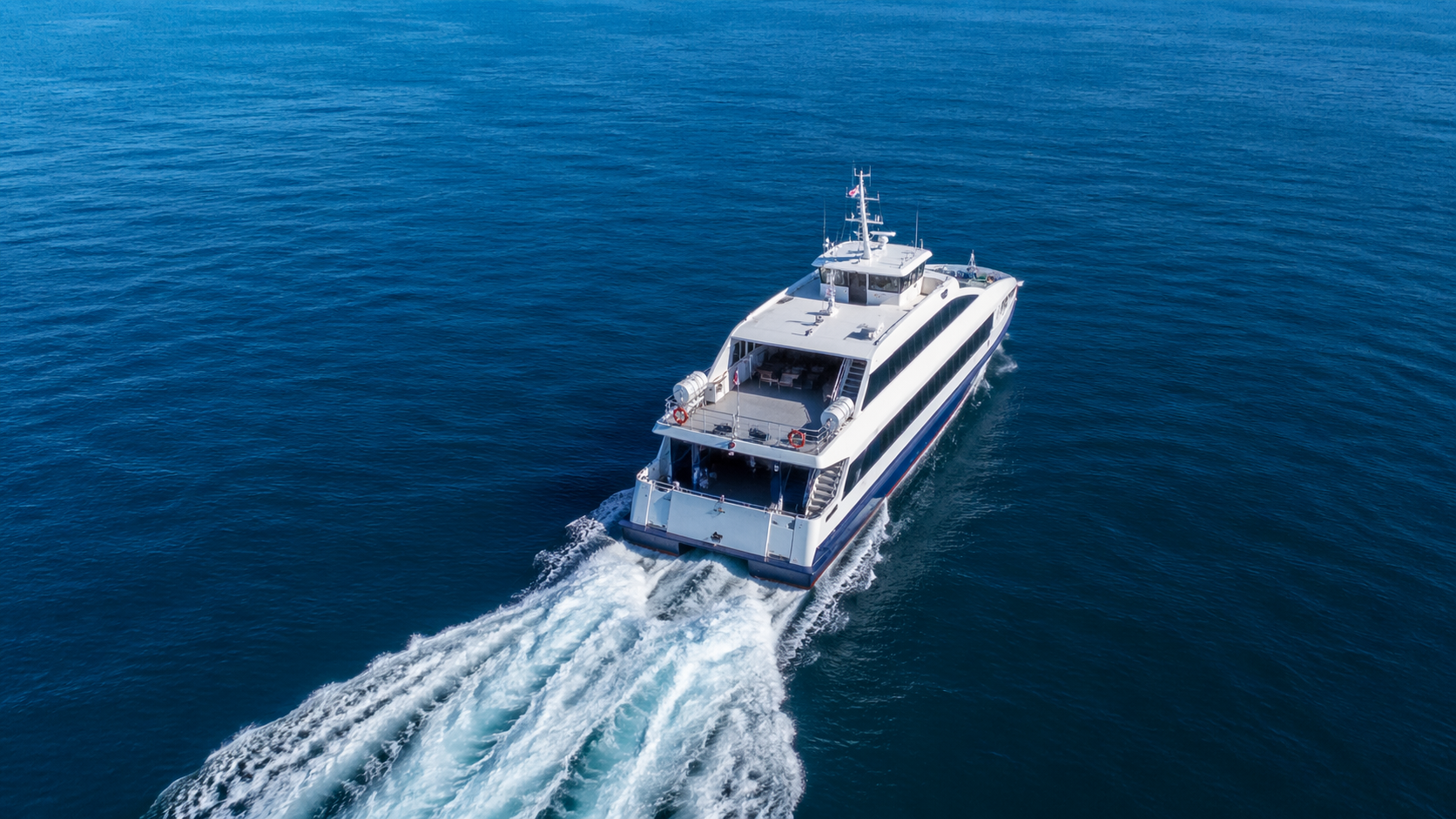
Digital Logbooks and Insurance: How Documentation Reduces Claims on Commercial Vessels
Insurers do not charge premiums based on how safe your fleet is. They charge premiums based on how safe your fleet can be proven to be. For a fleet manager running five or more commercial vessels, those are two very different things - and the gap between them is where documentation quality does most of its work.
The shift from paper logs to digital logbooks is usually framed as an operational improvement: less time at the dock, better visibility, fewer missed entries. The insurance story is less often told, and it is where a significant part of the financial return actually lives. Better documentation changes three things simultaneously - how claims resolve, how premiums get priced, and how subrogation disputes play out.
Why Marine Insurance Rewards Documentation So Heavily
Marine insurance is a documentation-intensive product. Every claim - hull, machinery, P&I, cargo - is adjudicated against a paper trail. The adjuster's default posture is skepticism. The underwriter's default posture is conservative pricing. Both are modified by evidence.
Commercial vessels traditionally produce that evidence through paper logs, engineer's notes, deck logs, and reports assembled after the fact. The assembly step is where things go wrong - not because anyone is dishonest, but because human memory and paper systems have documented failure rates that insurers price into their models. For a fleet manager running multiple hulls, that failure rate multiplies with every vessel.
Vessel Vanguard's Voyage Log, Engine Room Log, and Incident & Accident Reporting generate evidence as events happen - time-stamped, hull-specific, and tamper-evident. That is a different insurance product than paper, and underwriters treat it as such.
Where Digital Documentation Moves the Needle
Claim Speed
A claim supported by a complete digital record closes materially faster than one requiring the fleet manager to reconstruct events from paper sources. Faster resolution reduces operator downtime, shortens adjuster involvement, and reduces the window during which the adjuster is looking for reasons to reduce or deny payment.
Claim Amount
Adjusters discount ambiguity. When the causal chain behind a loss can be reconstructed precisely - engine temperature trend, alarm sequence, crew response timing - the adjuster's scope of reasonable dispute is narrower. Fleet managers with strong digital documentation consistently report fewer partial denials and fewer depreciation disputes.
Premium
Underwriters increasingly ask commercial fleet managers to demonstrate their maintenance and documentation program during renewal. Operators who can show live readiness data through Traffic Light Fleet Status, active work-item tracking via Work Orders, and a clean audit history via Smart Reports receive more favorable terms than those who arrive with the same hull list and a compliance binder.
Subrogation Defense
When another party is responsible for a loss - a contractor, a third-party vessel, a shoreside facility - a clean digital record is what makes recovery feasible. The fleet managers who actually collect on subrogation are the ones who can produce a minute-by-minute account of what happened. Paper logs routinely lose that fight.
What Underwriters Are Actually Looking For
It is not the volume of documentation that moves underwriting - it is the structure. Underwriters evaluating a commercial fleet increasingly look for specific characteristics.
Continuous maintenance records, not periodic reports. A record updated as work happens carries weight that a monthly summary never will. Continuous records also catch things summaries miss - the small defect addressed in two hours that never became an incident.
Work-item closure discipline. Issues raised, assigned, resolved, verified. Underwriters want to see that the fleet has a loop, not just a list. A visible closeout pattern in Work Orders is a quality signal. A list of perpetually open issues is a risk signal.
Incident and near-miss tracking with corrective action. A near-miss that does not generate a corrective action is invisible to an underwriter. Vessel Vanguard's Incident & Accident Reporting captures near-misses in real time with photos and generates the corrective action workflow automatically.
Crew training and certification currency by individual, not fleet averages. Fleet-level summaries hide individual lapses. Individual-level currency tracked through the Crew Log, with visible alerting, tells the underwriter the operation has a system rather than a report.
Exportable audit-ready packages. If producing an underwriter's evidence request takes three days, the underwriter notices. If it takes 15 minutes through Smart Reports, the underwriter notices that too. A 400-page safety binder tells an underwriter nothing. A 30-day Smart Reports export showing a closed-loop work-item flow tells them everything.
The Subrogation Case Most Fleet Managers Miss
Subrogation is where documentation quality pays its biggest single dividend - and where most commercial fleet managers leave money on the table. A typical scenario: a line-handling incident damages the hull. The cause was a third-party dock procedure. The insurer pays the claim. Recovery against the third party is legally available but practically impossible because no one captured the dock conditions, the sequence of line commands, and the precise hull contact point in real time.
With Vessel Vanguard's Incident & Accident Reporting and Voyage Log, that same incident produces a subrogation package: time-stamped photos, deck log entries from within 60 seconds of the incident, weather data, and video if the vessel has camera coverage. That is a recoverable claim. The paper version rarely is.
Where to Start
Step 1 -
Talk to your broker before your next renewal. Understand which specific documentation capabilities affect your premium. The list is shorter than you expect and often differs by market.
Step 2 -
Prioritize closed-loop work items. The single biggest underwriting signal is that issues raised on your vessels actually close with verification. Everything else is secondary.
Step 3 -
Standardize incident capture fleetwide. Photo, time, location, crew involved, environmental conditions - captured consistently every time, not when the crew remembers to.
Step 4 -
Build exportable audit packages from day one. If it takes your team three days to produce an underwriter's evidence request, you are already losing ground at renewal.
Frequently asked questions
Do digital logbooks actually reduce marine insurance premiums?
Not automatically, but they change the conversation at renewal. Underwriters pricing a fleet increasingly look for structural documentation markers - continuous maintenance records, work-item closure discipline, real-time incident tracking. Fleet managers who demonstrate those consistently receive more favorable terms than those with the same loss history and weaker documentation.
What documentation matters most during a marine insurance claim?
The causal chain behind the loss - engine data, alarm sequences, crew actions, environmental conditions. The more precisely that chain can be reconstructed from time-stamped digital records, the narrower the adjuster's scope of dispute and the faster the claim resolves.
How do digital logbooks help with subrogation?
Subrogation requires evidence that a specific third party was responsible. Digital logbooks with real-time photo, environmental, and log capture produce that evidence automatically. Paper logs rarely do, which is why most fleet managers leave recoverable subrogation money on the table.
Are digital logbook records admissible as legal evidence?
Generally yes, provided the system maintains time-stamped, tamper-evident, user-attributable records - the same standard that applies to paper logs, which digital systems meet more consistently.
What is the difference between a compliance binder and an underwriter-grade documentation program?
A compliance binder documents what the regulator requires. An underwriter-grade program documents what actually happens on the vessel. The overlap is significant but not identical, and the gaps are where claim disputes originate.
How long does it take to transition a commercial fleet from paper to digital logbooks?
For a fleet of 5 to 25 vessels, most fleet managers reach full coverage in two to four months. The pace is set by crew adoption rather than technology. Operators who introduce the platform alongside a workflow the crew already finds useful see faster uptake than those who roll it out purely as a compliance requirement.
Ready to modernize your vessel operations?
See how Vessel Vanguard helps marine operators stay compliant, reduce downtime, and run more efficiently.
Book a Demo