
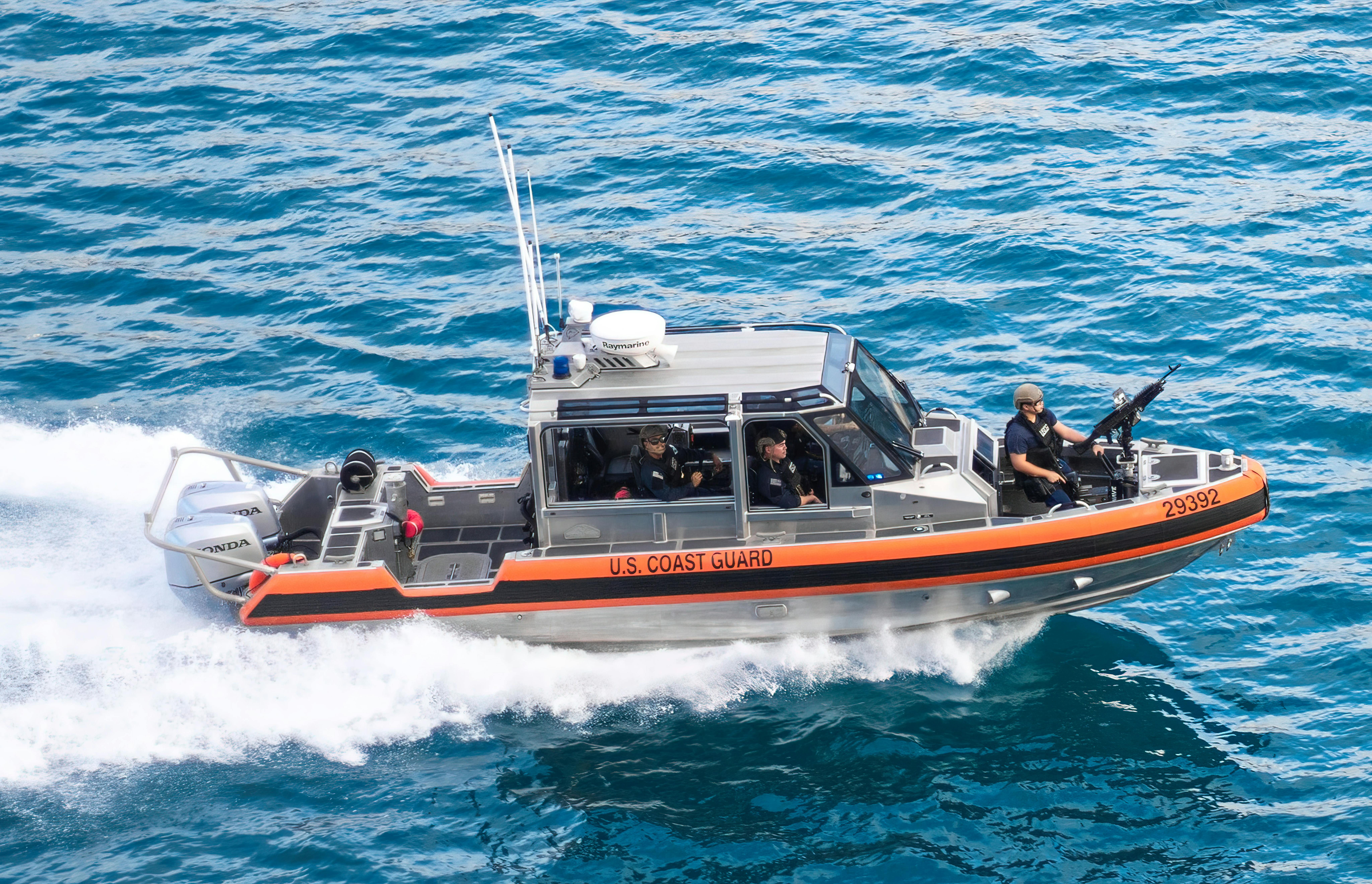
Building an Audit-Ready Safety Management System for Government Marine Fleets
Most Safety Management Systems pass the binder test. They do not pass the inspection test.
A binder-test SMS is a document that exists, has a table of contents, references the correct authorities, and sits on a shelf. An audit-test SMS is one that reflects how the fleet actually operates, generates evidence as operations happen, and can be reconstructed on demand by the manager responsible for it. Most government marine fleets have the first. Inspectors increasingly expect the second.
For the fleet manager running five to fifty government vessels - harbor patrol, research, environmental response, military support - the gap between those two things is where audit findings live. Closing it is less about writing better policies and more about wiring existing policies into systems that produce records automatically.
What "Audit-Ready" Actually Means
An audit-ready SMS has four attributes a binder-SMS does not.
Living documentation. The SMS updates as the operation changes - new vessel added, new crew rating, new mission profile - not on a quarterly cycle. Policies reflect current practice, and current practice reflects policy.
Evidence by default. Every policy that says "the master shall verify X" has a corresponding record showing that verification happened, with a name, a date, and a hull. A policy without a record is invisible to an auditor.
Closed-loop incident tracking. Every observation, drill finding, or near-miss is recorded, assigned, and resolved - and the resolution is verifiable. An SMS with open findings that never close is a liability, not a system.
Defensible retrieval. Any record the auditor asks for can be produced in minutes, in a format that needs no explanation. Government marine fleet managers tend to be strong on the first two attributes and weaker on the last two. That is where inspections most often go sideways.
The Five Pillars of an Audit-Ready SMS
1. Policies Mapped to Evidence
Every policy in the SMS should be tied to the evidence it generates. A pre-underway check policy generates a pre-underway form. A monthly drill policy generates a signed drill record. A preventive maintenance policy generates a maintenance log entry. When the map is explicit, the inspection becomes a trace, not a search. Vessel Vanguard's MOSS, SMS & SOP Compliance module structures exactly this - each policy element linked to the operational record it produces, all of it version-controlled and audit-ready.
2. Crew Currency as a Live System
Certification tracking fails government fleets more often than any other SMS element. The fix is to stop treating currency as a list and start treating it as a live system. Vessel Vanguard's Crew Log tracks certifications by individual with automatic alerts at 90, 60, and 30 days before expiration, pushed to both the crew member and the supervising officer. Lapses stop being a function of whether someone happened to check a spreadsheet.
3. Drills as Data, Not Events
An audit-ready SMS captures not just that the drill happened but completion rates, time-to-proficiency, and repeat findings across the fleet. Vessel Vanguard's Training & Drills module logs every drill with attendance, outcomes, and auto-generated reminders for the next cycle. The pattern of what keeps surfacing in drill findings is often the most valuable operational intelligence an SMS produces.
4. Incident Reporting With Real Resolution
Incident reports that do not close are a red flag in any audit. Vessel Vanguard's Incident & Accident Reporting assigns every report an owner, a due date, and a visible status. Closed reports include verification evidence - a repair photo, a retraining record, a procedure update - not just a checkbox that says resolved. An auditor who sees 40 closed reports with consistent verification knows what kind of operation they are dealing with.
5. Management Review That Actually Reviews
The periodic management review is where most SMSs turn into theater. An audit-ready SMS brings real metrics into that meeting. Smart Reports pull fleet-wide performance data - overdue maintenance, currency gaps, open incidents, drill findings - in a format that shows leadership saw the numbers and acted on them. A review without metrics is a meeting. A review with metrics and tracked actions is a management system.
Where Government Fleet Managers Commonly Fall Short
Three patterns come up repeatedly in government marine audits.
The SMS document is current, but the forms in use at the dock are from an earlier revision. This is an instant finding. The fix is to make the forms the document - generated from the SMS itself, version-controlled, and accessible where the work happens.
Training records exist but cannot be produced for a specific date range or a specific individual without digging through multiple systems. An auditor who waits two hours for a crew member's training record has already drawn a conclusion.
Drill findings are recorded and never referenced again. Over three years, the same findings appear in the drill log with no evidence of action. This is the single most common government marine audit finding, and the most avoidable. Every drill finding should generate a tracked action item with an owner and a closeout date.
Building It in Phases
Step 1 - Inventory what you already have. Most government fleet managers are sitting on 80 percent of the content they need - it is scattered across shared drives, inboxes, and binders. Pulling existing pieces into one list is often the most revealing step of the project.
Step 2 - Choose the platform before the format. Starting with a Word template and migrating later is almost always a net loss. The structure of a document-based SMS resists conversion to a live system.
Step 3 - Convert policies to evidence maps. For each policy, document the record it should generate, where that record lives, and who is accountable. This map alone is often the most valuable artifact of the build.
Step 4 - Run a parallel audit before the real one. Have a second set of eyes run the inspection cold. Whatever they cannot find, the real inspector will not find either. Fix the gaps before the audit, not during it.
What Success Looks Like at Inspection
The signature of an audit-ready SMS is not a flawless binder. It is a short inspection. The fleet manager produces the last 12 months of preventive maintenance records for a given vessel in under five minutes. A single Smart Report answers the certification currency question for every crew member on shift. The corrective action from a drill finding nine months ago shows the finding, the owner, the action, and the verified closeout.
The inspection ends early because there is nothing to dig for. For government marine fleet managers, that is the bar.
Frequently asked questions
What is the difference between an SMS document and an SMS system?
An SMS document is written policy. An SMS system is the combination of policy, evidence, tracking, and closeout that turns policy into verifiable practice. An audit evaluates the system, not the document, and the gap between them is where findings originate.
How long does it take to move a government marine fleet to an audit-ready SMS?
For a fleet of 10 to 30 vessels, four to six months from project kickoff to a parallel audit is realistic. Going faster usually produces a polished-looking SMS with the same structural gaps as the one it replaced.
What are the most common audit findings for government marine fleets?
Crew certification lapses, open incident reports with no closeout, drill findings with no tracked actions, and preventive maintenance records that do not match the policy schedule. All four are structural rather than cultural, and all four are addressable with better tooling.
Do we need a separate SMS platform if we already have a fleet maintenance system?
Not necessarily. Many audit-ready SMSs are built on top of fleet management platforms that already handle maintenance, crew, and incident tracking. Integration avoids the two-systems, two-truths problem that defeats most standalone SMS tools.
How does a digital SMS handle document version control during an audit?
Properly implemented digital SMSs version-control both the policy document and the forms it generates, so an auditor can see exactly which version of a procedure was in effect on any given date. Paper systems almost never do this.
What is the most under-invested part of a government marine SMS?
Management review. Most operations treat it as a calendar obligation rather than a governance function. Bringing live operational metrics from Smart Reports into review - and tracking the resulting actions through to closeout - is what separates a serious SMS from a ceremonial one.
Ready to modernize your vessel operations?
See how Vessel Vanguard helps marine operators stay compliant, reduce downtime, and run more efficiently.
Book a Demo