
Boat Vibration: How to Diagnose and Fix Common Causes on Your Vessel
A vibrating boat is communicating. The signal may be subtle - a rhythmic thumping at cruising speed, a vibration through the helm that wasn't there last season - or pronounced enough to concern passengers. Either way, the vessel is flagging a mechanical condition that, if ignored, progresses from a minor repair to a significant one. For commercial operators and working charter vessels, the stakes are higher: unexplained vibration is a breakdown-in-progress, and downtime is lost revenue.
Here is how to read the signal and find the source.
The Four Most Common Sources of Abnormal Boat Vibration
Most boat vibrations originate from one of four sources: the propeller, the cutlass bearing and strut, the propeller shaft alignment, or the engine. Of these, propeller and cutlass bearing problems are the most common and the most straightforward to address. Engine-sourced vibration is the most complex and the least likely to have a simple external fix.
Working through the list in order of likelihood - propeller first, engine last - is the most efficient diagnostic approach.
How to Tell If Your Propeller Is Causing Vibration
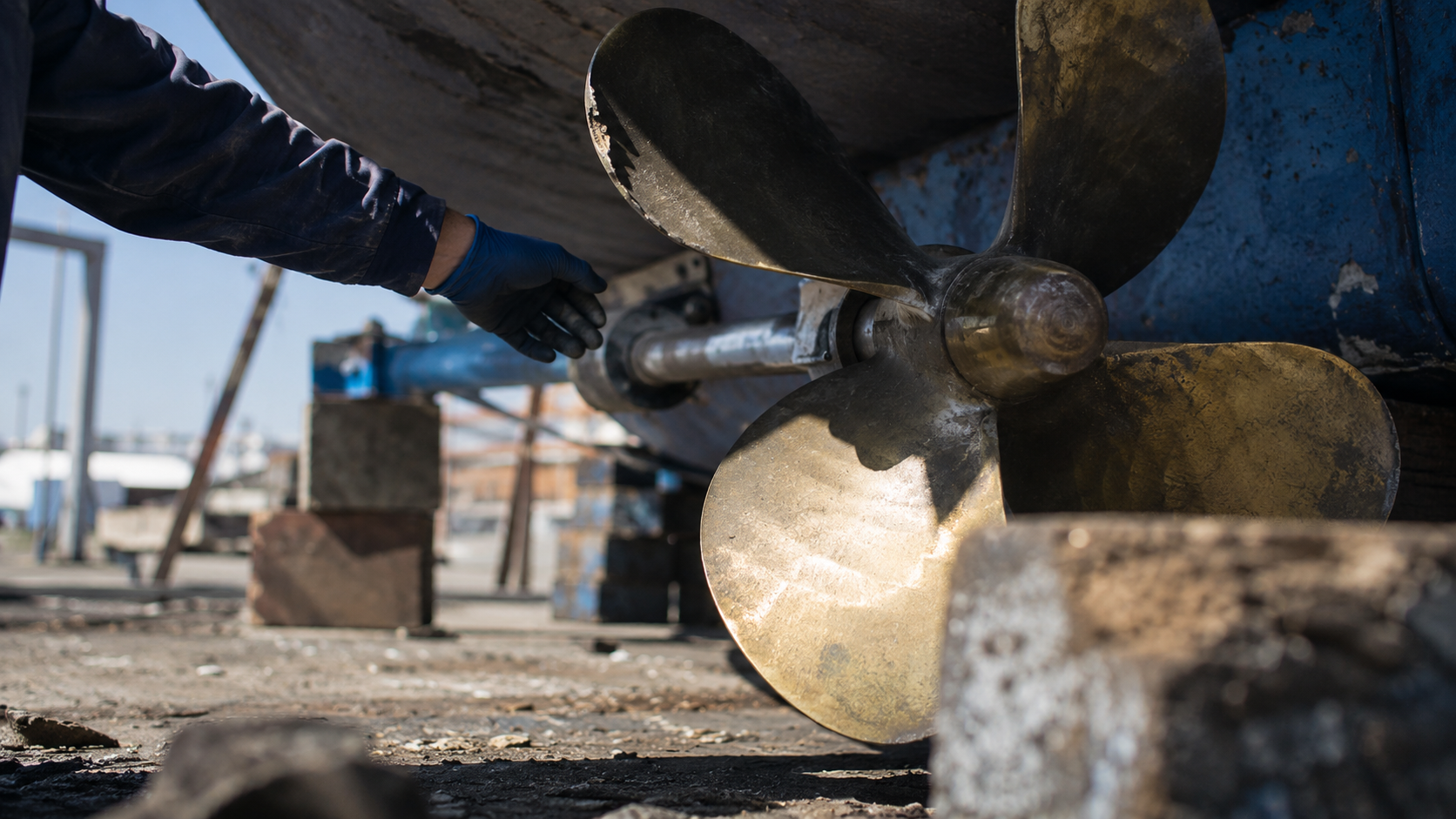
Propeller damage is one of the leading causes of boat vibration, and even minor damage creates a noticeable effect. Striking a crab pot float, a shallow-bottom grounding, or a submerged debris field can distort a blade enough to cause a rhythmic thumping or throbbing that correlates directly with engine RPM.
Have the propeller pulled and inspected at a propeller shop. Propeller shops can inspect, balance, and recondition most propellers for significantly less than most owners expect - and far less than the bearing and shaft wear that an out-of-balance prop generates over a season of use. If the propeller is more than a few years old or has sustained any contact, inspection is time well spent regardless of whether vibration is present.
What Is a Cutlass Bearing and How Does It Cause Boat Vibration?
The cutlass bearing is a sacrificial bearing housed in the strut - the external support structure that holds the propeller shaft as it exits the hull. It is typically made from rubber or a resilient composite encased in a bronze housing, water-lubricated by flow through internal channels. Cutlass bearings wear over time, and a worn bearing is among the first things any experienced yard worker checks when vibration is reported.
When the cutlass bearing wears excessively, the shaft develops play at the strut. That movement causes uneven load on the packing gland and, over time, accelerated wear at the shaft seal. A replacement cutlass bearing is an inexpensive part. The downstream damage from ignoring it is not.
To check: with the boat hauled or the prop shaft accessible, grasp the shaft and try to move it laterally. Any perceptible wobble indicates the cutlass bearing needs attention.
What Is Shaft Alignment and Why Does It Cause Vibration?
Shaft misalignment is a frequently overlooked and consistently underdiagnosed cause of boat vibration. Even when couplings appear tight, the tolerances across an entire shaft run are small enough that minor misalignment generates vibration that is difficult to attribute to any single component.
Alignment can shift when a boat is hauled and relaunched - particularly on larger vessels where hull stresses change as the boat settles in the water. Shaft alignment should be checked as routine seasonal maintenance, not only when vibration appears. For commercial charter vessels with high annual hours, alignment should be part of every haulout inspection protocol.
When shaft vibration is suspected, knowing the exact date of the last alignment check - and the last propeller service - significantly accelerates the diagnostic conversation with your yard.
How to Diagnose Whether Engine Problems Are Causing Vibration
Engine-sourced vibration is the most complex category and the one most likely to require a qualified marine mechanic. Causes range from fuel mixture issues and ignition timing to worn mounts or developing bearing problems. Unlike propeller or shaft vibration, engine vibration does not follow a simple pattern and cannot be diagnosed by inspection from outside the engine.
The most useful diagnostic tool you have is familiarity with your engine's normal behavior: how it sounds and feels at idle, at cruise RPM, under load, and at anchor. When something changes - a new vibration at a specific RPM range, a roughness that was not there before - that change is meaningful. Log it, note the conditions under which it appears, and bring that information to your mechanic. A maintenance log that records engine hours, service history, and any anomalies over time makes this diagnostic process significantly more efficient and productive.
Frequently asked questions
How do I stop my boat from vibrating?
Work through the four most common causes in order of likelihood: inspect the propeller for damage or imbalance, check the cutlass bearing for wear, verify shaft alignment, then inspect engine mounts. Most boat vibration is caused by one of these four issues and can be resolved without major expense when diagnosed early.
What causes boat vibration at high speed but not at idle?
Vibration that appears at a specific RPM range and disappears at idle typically points to a propeller or shaft issue rather than an engine problem. Propeller blade distortion from a debris strike or grounding creates an imbalance that intensifies as RPM increases. A worn cutlass bearing behaves similarly - lateral play in the shaft becomes more pronounced under load. If the vibration tracks with RPM, start with a propeller inspection before investigating the engine.
How do I know if my cutlass bearing needs replacing?
The simplest check is a manual shaft deflection test. With the boat hauled or the shaft accessible, grasp the propeller shaft near the strut and try to move it laterally. Any perceptible wobble or play means the cutlass bearing is worn and should be replaced. A cutlass bearing is an inexpensive part - ignoring it is not, as a worn bearing accelerates wear at the shaft seal and packing gland.
How often should shaft alignment be checked on a boat?
Shaft alignment should be checked at every haulout, not only when vibration appears. Alignment can shift when a boat is relaunched, particularly on larger vessels where hull stresses change as the boat settles in the water. For commercial charter vessels and working boats with high annual hours, shaft alignment verification should be a standard item in every haulout inspection protocol.
Can untreated boat vibration cause long-term damage?
Yes. Vibration that goes undiagnosed creates cumulative mechanical damage. An out-of-balance propeller accelerates wear on the cutlass bearing and shaft seal. A worn cutlass bearing adds stress to the packing gland. Engine vibration from failing mounts transfers load to hull structure over time. What starts as a minor repair - a propeller reconditioning or cutlass bearing swap - becomes a costly haulout if left unaddressed across a full season.
What information should I have ready before calling a marine mechanic about vibration?
The most useful details are when the vibration first appeared, the RPM range or conditions under which it occurs, and the vessel's recent service history - specifically the date of the last propeller service, shaft alignment check, and cutlass bearing inspection. Mechanics diagnose vibration faster when they know what has already been ruled out. A digital maintenance log that tracks service history, engine hours, and any anomaly notes makes this conversation significantly more efficient.
Ready to modernize your vessel operations?
See how Vessel Vanguard helps marine operators stay compliant, reduce downtime, and run more efficiently.
Book a Demo