
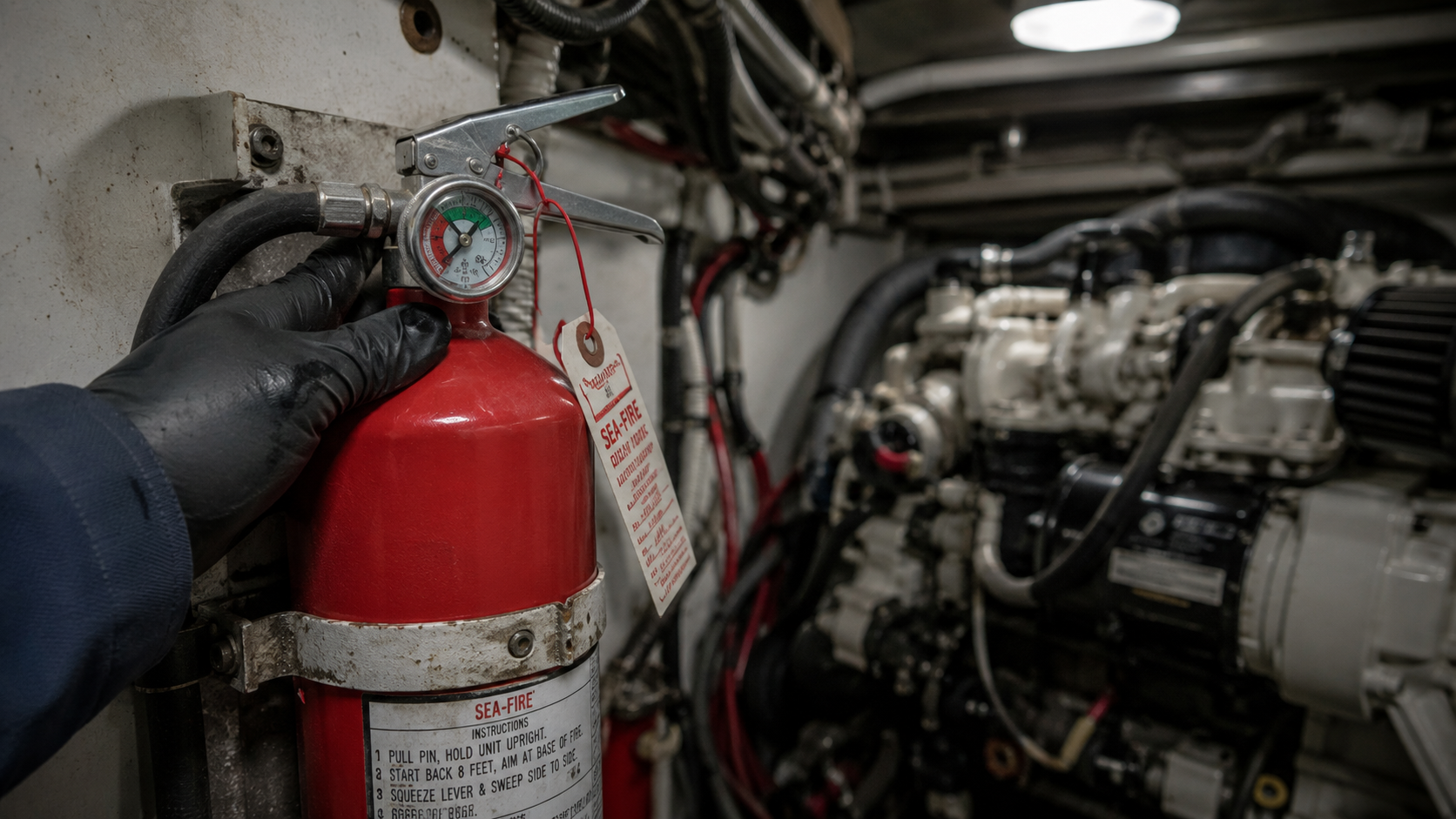
Boat Fire Preparedness: Are You and Your Vessel Ready?
Boat fires move fast. Unlike a structure fire where multiple exits and warning time are typically available, a vessel fire can make the accommodation spaces uninhabitable within minutes. The escape routes are fewer. The available help is further away. And the consequences of a fire that was preventable - through inspection, documentation, and equipment maintenance - are harder to accept.
This is a working reference for vessel owners and operators who want to meet and exceed the minimum standard.
What Actually Causes Most Boat Fires
DC electrical system failures - batteries, wiring, alternators, and associated components in the engine room - account for more than half of all boat fires according to marine insurance claims data. Shore power connections are a significant secondary source, particularly the terminals at the shore power inlet where the boat's wiring connects. Fuel system failures account for most of the remainder.
The implication is practical: fire prevention is primarily an electrical maintenance discipline, not just equipment purchasing.
What Fire Extinguishers Does My Boat Actually Need?
The US Coast Guard establishes minimum fire extinguisher requirements based on vessel length. The Coast Guard minimum is a regulatory floor - not a complete fire safety plan.
A practical standard for prepared vessel owners and operators: at least one portable extinguisher accessible from any position on the vessel within three large steps; fixed systems installed and maintained in all engine rooms and engineering spaces; and all units inspected at the start of each season with gauges in the green and safety pins intact.
For charter and commercial operators, fixed engine room systems require particular attention. Verify that fixed system extinguishers have not been previously discharged - a three-year-old vessel whose engine room extinguisher safety pins have never been inspected may have units that have already partially discharged and are below effective operating pressure.
What Smoke Detectors Should Be Installed on a Vessel?
Smoke detectors aboard should use photoelectric sensing, or a combination of photoelectric and ionization sensing. Ionization-only detectors are not appropriate for the marine environment. Battery-powered units rated for marine use are the most practical option for most recreational and charter vessels.
Install at minimum one detector in each sleeping compartment and at least one in common areas outside sleeping spaces. For vessels with crews or passengers aboard overnight, this is both a safety and a compliance requirement.
NFPA 302 Fire Escape Requirements for Recreational and Commercial Vessels
NFPA 302, the Fire Protection Standard for Pleasure and Commercial Motor Craft, establishes minimum escape requirements for enclosed accommodation spaces. These requirements matter directly for commercial operators undergoing inspections and for any owner whose vessel has enclosed berths.
Key provisions:
Every boat with enclosed accommodation spaces must have a readily accessible and unobstructed means of egress
Boats must have a second means of egress if the primary exit could be blocked by a fire originating in a galley or machinery area
Circular escape hatches must have a minimum diameter of 18 inches (457mm)
Non-circular escape hatches must have a minimum dimension of 14.5 inches (368mm) and a minimum area of 270 square inches (0.174 square meters)
The vertical distance to the means of egress must not exceed 47.5 inches (1.2 meters)
Any hatch serving as a means of egress must be operable from both inside and outside when secured and unlocked
What ABYC Standards Require for Accommodation Space Exits
ABYC H-3.5 requires that enclosed accommodation compartments and designated sleeping compartments have a readily accessible and unobstructed means of exit, and a second means of exit to open air that does not lead through or over a cooking appliance. These requirements complement and reinforce NFPA 302.
A Practical Fire Prevention Protocol for Vessel Owners and Operators
Inspect all DC electrical connections associated with the engine starting and charging circuit monthly during the boating season
Inspect battery wiring, switches, and terminals monthly - clean at the start and end of season
Inspect and replace wiring harnesses and starters on vessels over 25 years old
Inspect shore power cords before each use; replace if corrosion, pitting, or heat damage is visible
Inspect the shore power inlet rear terminals every five years; replace at first sign of corrosion
Never use an electric heater when no one is aboard
Inspect all fire extinguishers at the start of each season - gauge pressure, safety pin condition, and for fixed systems, discharge indicator
For commercial operators and fleet managers, tracking fire extinguisher inspection dates, shore power inlet service intervals, and smoke detector battery changes through a maintenance log removes the most consistent cause of fire safety failures: deferred inspections that accumulated until an incident made them relevant.
Frequently asked questions
What is the most common cause of boat fires?
DC electrical system failures - particularly in the engine room where batteries, alternators, and battery chargers are concentrated - cause more than half of all recreational boat fires according to marine insurance claims data. Shore power connection failures are the primary cause of AC electrical fires aboard.
How many fire extinguishers does a boat need?
The US Coast Guard establishes minimum quantities based on vessel length, but the practical standard for prepared operators is at least one portable extinguisher accessible from any position aboard within three steps, with fixed systems in engine rooms inspected annually. Commercial and charter operators should confirm their specific USCG requirements based on vessel class and route.
What are the NFPA 302 escape hatch size requirements for boats?
Per NFPA 302, circular escape hatches must have a minimum interior diameter of 18 inches (457mm). Non-circular hatches must have a minimum dimension of 14.5 inches (368mm) and a minimum area of 270 square inches. All escape hatches must be operable from both inside and outside the vessel when secured and unlocked.
What type of smoke detector should I use on a boat?
Marine-rated smoke detectors using photoelectric sensing, or a combination of photoelectric and ionization sensing, are the appropriate choice for vessels. Ionization-only detectors are not suitable for the marine environment. Install at minimum one in each sleeping compartment and one outside sleeping areas.
Do charter vessels have to meet NFPA 302 fire escape requirements?
NFPA 302 applies to pleasure and commercial motor craft. Commercial operators and charter vessels should review their specific USCG inspection requirements, which reference NFPA 302 and ABYC standards for accommodation space egress. Vessels with enclosed berths for crew or passengers should ensure all escape routes meet minimum dimension requirements and are unobstructed.
Ready to modernize your vessel operations?
See how Vessel Vanguard helps marine operators stay compliant, reduce downtime, and run more efficiently.
Book a Demo