
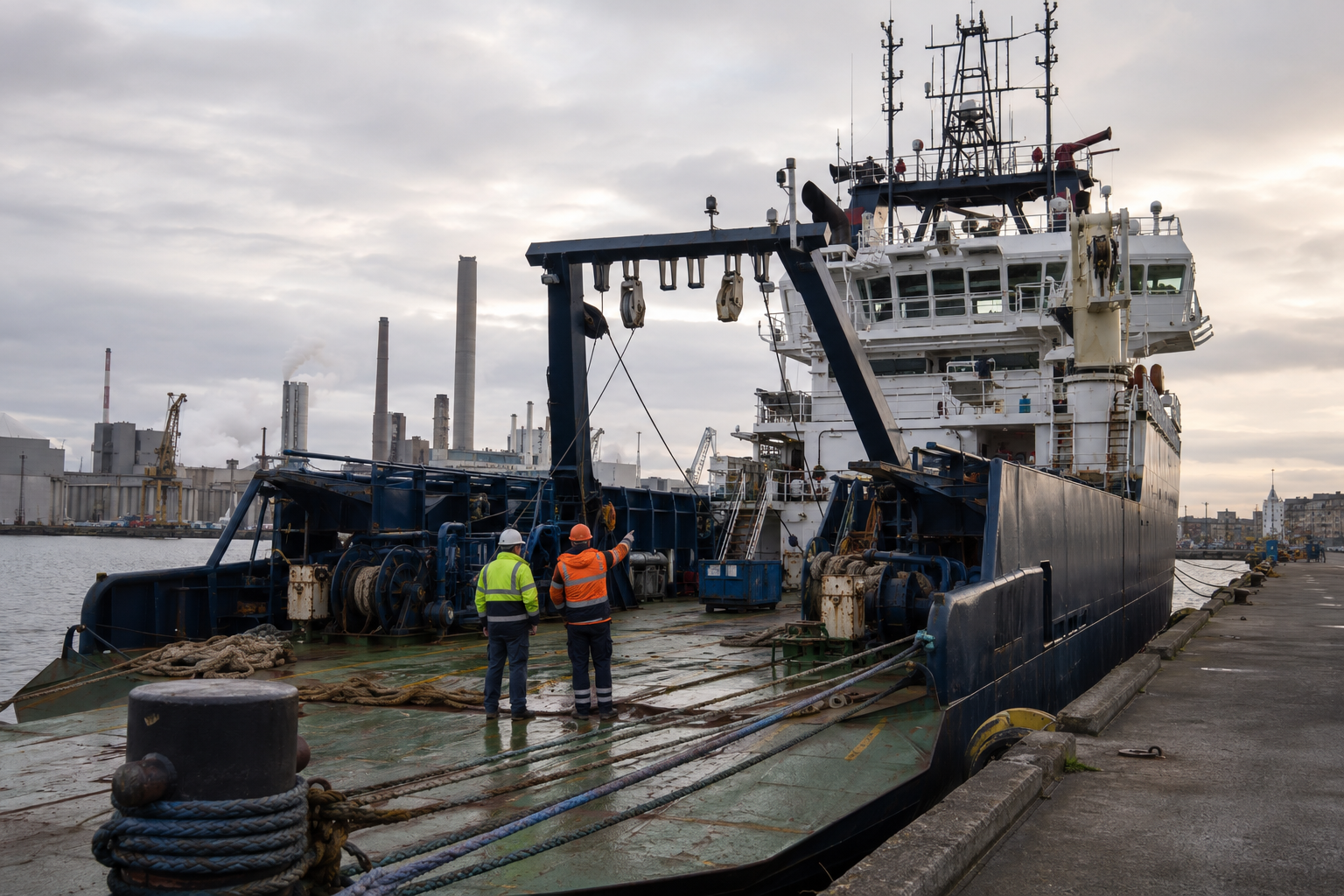
9 Fleet Safety Risks From Poor Crew Task Scheduling
Poor crew task scheduling is one of the most common - and least visible - sources of fleet safety risk in maritime operations. According to the EMSA Annual Overview of Marine Casualties and Incidents 2024, 58.4% of accident events were linked to human action. Research across marine insurers and safety authorities consistently puts human error as a contributing factor in 75% to 96% of all marine accidents. The majority of those errors are not random. They trace back to systems failures - tasks that were never assigned, responsibilities that were never tracked, and schedules that existed in someone's head rather than in a vessel task management software platform.
These are the nine fleet safety risks that emerge when crew task scheduling breaks down.
1. Fatigue From Untracked Work Hour Overruns
When crew task assignments are managed informally, work hours are invisible. A crew member takes on tasks from two departments because no one has oversight of their full workload. Scheduling gaps get filled by whoever is available rather than whoever is rested. No one flags the overrun because there is no system tracking it.
The consequences are not abstract. According to a 2023 Transport Canada analysis of fatigue in the maritime sector, scheduling intensity and poor organizational support are primary management-related fatigue drivers - and fatigue has been identified as a contributing factor in more than 30% of major maritime accidents globally. Fatigued crew make errors in navigation, maintenance, and emergency response. Those errors compound.
Structured crew task scheduling with role-based assignment gives operations leaders visibility into workload distribution before it becomes a fatigue risk. When tasks are formally assigned and tracked, overloaded crew become visible in the system - not after the incident, but in time to act.
2. Missed Preventive Maintenance Intervals
Preventive maintenance is only preventive if it is assigned and completed on time. When crew scheduling is informal, maintenance tasks get verbally delegated, deferred, or simply forgotten during busy operational periods. No one owns the interval. No one tracks whether it was completed.
This is how engine room failures accumulate. DNV's Maritime Safety Trends report found that machinery damage or failure was the leading cause of maritime casualties every year from 2014 to 2024, accounting for 60% of all cases by 2024. The majority of machinery failures are not sudden - they develop through deferred or missed maintenance that was never formally tracked.
Preventive Maintenance scheduling tied directly to crew task assignment ensures that every interval has a named owner, a due date, and a documented completion record. Maintenance does not slip between crew rotations because the task - and the accountability for it - is in the system.
3. Safety Drills Missed or Improperly Documented
SOLAS Chapter III Regulation 19 is unambiguous: crews must conduct monthly emergency drills including abandon-ship and fire drills, and every drill must be documented. The standard does not care whether scheduling was informal - Port State Control inspectors do.
When drill scheduling exists only on a whiteboard or a shared calendar with no completion tracking, drills get pushed. A voyage runs long. A crew change creates confusion about who owns the next drill cycle. The inspection happens before the schedule resets. As Marine Inspection's SOLAS compliance analysis notes, incomplete or missing drill records are among the most common grounds for PSC deficiency notices - and deficiency notices lead to required rectification before departure, increased inspection frequency, or detention.
Scheduled drills assigned as tracked crew tasks, with digital completion sign-offs and timestamped records, turn SOLAS compliance from a periodic scramble into an ongoing operational posture.
4. Lapsed Crew Certifications and STCW Endorsements
Crew certifications have expiry dates. Without automated tracking tied to crew task scheduling, those dates are managed by individual crew members or periodic manual audits - neither of which is reliable at fleet scale or across crew rotations.
The risk is both regulatory and operational. A crew member whose STCW medical fitness certificate lapsed three weeks ago is not compliant for their role. If an incident occurs and the investigation establishes that an uncertified crew member was on watch, the liability extends to everyone in the chain of command who should have known. As SOLAS and STCW compliance guidance confirms, a crew member can hold a valid STCW certificate but still fail a PSC inspection if they have not participated in the required onboard drills - and vice versa.
Automated crew certification tracking with 90, 60, and 30-day renewal alerts converts a compliance liability into a managed workflow. Renewals are scheduled as assigned tasks. Completions are documented. The fleet record stays current without requiring anyone to manually audit it.
5. Uncovered Watch Positions During Crew Transitions
Crew rotation is one of the highest-risk periods in vessel operations. When scheduling is managed informally, handover is verbal. Task ownership transfers by conversation, not by system. In the gaps between what the outgoing crew remembers to say and what the incoming crew understands they are responsible for, critical positions go uncovered and active tasks go untracked.
This is not a fringe scenario. The NTSB's Safer Seas Digest 2024, which analyzed 34 maritime casualties, specifically identified appropriate staffing for all operations - including during maneuvers and crew transitions - as a leading preventable safety factor. Undocking, port entry, and crew change periods were all cited as high-risk windows where staffing gaps contributed to casualties.
Crew task scheduling with clear role-based assignment and handover documentation ensures that every position has a named owner at every point in the operational cycle. Incoming crew inherit a full task record, not just what the outgoing crew thought to mention at sign-off.
6. Corrective Actions After Incidents Go Unassigned
Incident reporting is only useful if it leads to action. In fleets without vessel task management software, incident reports are filed - and corrective actions are agreed to verbally, assigned informally, and tracked by no one. The incident becomes a compliance record. The underlying condition remains.
This is how repeat incidents happen. The same fitting fails twice on the same vessel. The same near-miss gets reported six months apart by different crew members who do not know the first report exists. Without closed-loop corrective action assignment, incident reporting is a documentation exercise rather than a safety tool.
Integrated incident and accident reporting with corrective action workflows changes this. When an incident is logged, the corrective task is assigned in the same system, with an owner, a deadline, and a completion requirement before the item can be closed. The loop closes. The risk is addressed. The record is there when the next inspection asks what was done.
7. New Crew Familiarization Gaps
New crew members joining a vessel are required to receive and sign off on safety familiarization training within the first 24 hours onboard. SOLAS and STCW both mandate this. In practice, when crew task scheduling is informal, familiarization often gets squeezed between arrival logistics, watch schedules, and the immediate operational demands of the vessel.
The result is crew members operating in environments they have not been formally familiarized with - not knowing the location of muster stations, fire suppression systems, or emergency procedures for the specific vessel they are working on. This is not a technicality. It is a direct operational and safety gap that PSC inspectors specifically look for.
Crew task scheduling that automatically triggers a familiarization checklist at the point of crew sign-on, with digital sign-off and timestamped completion, ensures the requirement is met every time - not just when someone remembers to handle it.
8. Third-Party and Contractor Work Outside the Vessel Record
When contractors or vendors perform work onboard, that work often happens outside the vessel's formal maintenance record. There is no work order. There is no completion log. There is no documentation of what was done, what parts were used, or what the vessel's system status was before and after.
From a fleet safety and compliance standpoint, this is the same as the work not happening - or worse, because the vessel's official maintenance record now contains gaps that obscure its actual condition. Port state control, insurance underwriters, and incident investigators all rely on the maintenance record to understand what was known about the vessel's condition. A record with unexplained gaps is a liability.
Digital work order tracking that encompasses third-party and contractor work alongside crew-performed maintenance ensures that the vessel's full service history is complete and accurate, regardless of who performed the work.
9. No Fleet-Wide Visibility for Shore-Based Operations Leaders
For operations managers and fleet supervisors working from shore, informal crew task scheduling creates a fundamental problem: there is nothing to see. The fleet's operational status exists in individual vessel logs, informal communications, and end-of-day reports that may or may not reflect current conditions.
This is what has been described in maritime operations as "fleet blindness" - the inability to see which vessels have open maintenance items, which drills are overdue, which certifications are approaching expiry, and which corrective actions are still open, across the entire fleet, in real time. Decisions get made on outdated information. Problems that would have been caught by a shore-based review go undetected until they surface as incidents.
Traffic Light Fleet Status gives operations leaders a real-time view of every vessel's health and compliance posture from a single dashboard. Open work orders, overdue tasks, aging deferrals, and certification gaps are visible across the fleet before they become inspection findings or safety events. That visibility is the difference between managing a fleet and reacting to one.
What These Nine Risks Have in Common
Every one of these risks shares the same structural cause: task ownership, completion accountability, and operational records that exist informally, if they exist at all. Vessel task management software does not eliminate the complexity of running a fleet. It makes that complexity visible, trackable, and manageable before it becomes a casualty.
The NTSB's conclusion in its 2024 Safer Seas Digest was direct: most of the accidents investigated were preventable. Preventability requires systems. Systems require structure. And structure, in maritime fleet management, starts with knowing who is doing what, when it was done, and what the record shows.
Frequently asked questions
What is crew task scheduling in vessel operations?
Crew task scheduling is the process of formally assigning, tracking, and documenting operational and maintenance responsibilities to specific crew members across a vessel or fleet. In vessel task management software, this includes preventive maintenance assignments, safety drill coordination, certification tracking, and corrective action follow-through - all tied to named crew with deadlines and completion records.
How does poor crew task scheduling create fleet safety risks?
Poor crew task scheduling creates fleet safety risks by making task ownership informal and unverifiable. When maintenance intervals, safety drills, watch coverage, and corrective actions are managed verbally or through informal channels, they cannot be tracked, escalated, or audited. Tasks get missed, deferred, or lost in crew transitions - and those gaps accumulate into conditions that lead to incidents.
What are the most common compliance failures linked to crew scheduling gaps?
The most common compliance failures from scheduling gaps include missed SOLAS monthly drill requirements, lapsed STCW crew certifications, incomplete familiarization records for new crew, and corrective actions from incident reports that were never formally assigned or completed. All of these are regularly cited as PSC deficiency grounds.
How does vessel task management software improve crew safety and compliance?
Vessel task management software improves safety and compliance by converting informal task ownership into structured, trackable workflows. Preventive maintenance intervals are assigned and scheduled. Drills are tracked with digital completion sign-offs. Crew certifications generate automated renewal alerts. Corrective actions from incidents are assigned with deadlines and cannot be closed without documented completion. Every step creates a timestamped record.
What is the link between crew fatigue and task scheduling in maritime operations?
Crew fatigue is directly linked to task scheduling when workload distribution is invisible. Without a formal task management system, crew can be overloaded without operations leaders being aware of it - especially during crew transitions or high-tempo operational periods. Fatigue has been identified as a contributing factor in more than 30% of major maritime accidents. Structured scheduling with role-based assignment makes workload visible before it becomes a fatigue risk.
How does Vessel Vanguard address crew task scheduling for commercial fleets?
Vessel Vanguard's platform includes role-based crew task assignment, preventive maintenance scheduling, safety drill tracking, automated crew certification alerts, closed-loop incident and accident reporting with corrective action workflows, and Traffic Light Fleet Status for real-time fleet-wide visibility. All completed tasks are timestamped, stored, and exportable for audit-ready compliance documentation.
Ready to modernize your vessel operations?
See how Vessel Vanguard helps marine operators stay compliant, reduce downtime, and run more efficiently.
Book a Demo